
A burst fade curves around the ear in a semicircle, leaving the hair at the nape and above the ear fuller, while a low burst keeps that curve close to the ear so the effect is subtle. It works with almost any top, which is why this gallery is so varied: a V-shaped back with crisp shaved designs, a classic Caesar refreshed with a side fade, a tall pompadour, a curly crop, a curly mullet, a side part with a shaved line, a middle-parted fringe, a silver Edgar cut and an Ivy League update.
Because the fade sits low, it is a good fit for men who want a clean outline without the stark contrast of a high skin fade. It also leaves more length at the back, which is exactly what mullets and faux hawks need. Rounder faces benefit from pairing it with volume on top, such as a pompadour or mohawk, while oval and diamond shapes can carry a centre part comfortably.
Texture is worth thinking about before you book. Straight hair shows regrowth quickly and may need a burst to add structure, thick hair should be thinned so the fade line stays crisp, and curls shrink when dry, so leave extra length on top.
1. V-Shaped Cut in the Back
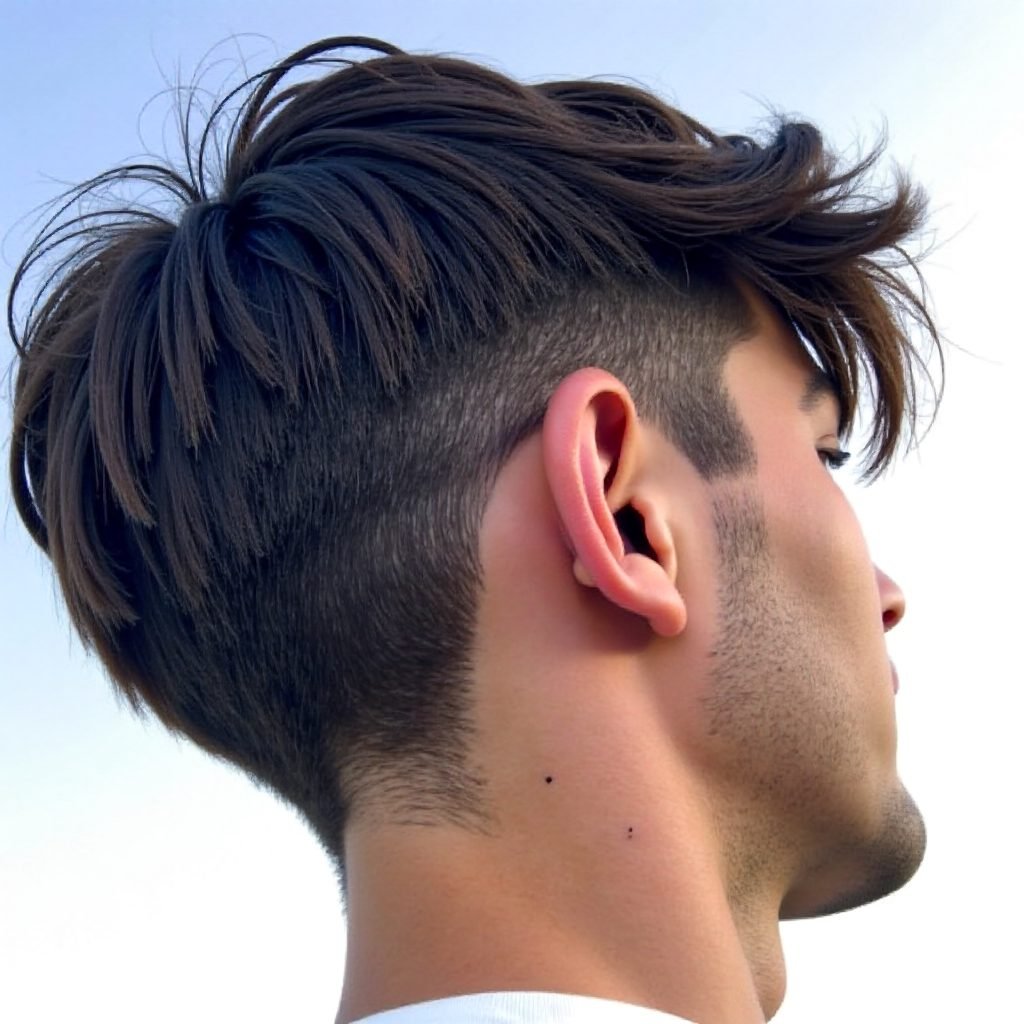
Soft waves on top are given structure by geometric details below. A clear V-shape at the nape is outlined with a shaved line, and sharp designs are carved into the fade itself. The contrast between soft texture and graphic lines keeps the look balanced.
Inspiration: @jorges_fades
2. Taper Fade

Combining a low burst fade with a taper fade follows the natural shape of the head. The taper shortens the hair gradually and blends the sides into the back. With this pairing you can style the top casually or neatly for formal occasions.
Inspiration: @barbersmirfo
3. Caesar Cut

A traditional Caesar with its short straight fringe can start to feel repetitive. Adding a low burst fade at the sides freshens it up without changing the overall character. It remains one of the most low-maintenance cuts around.
Inspiration: @scissorhand_barbershop
4. Pompadour Haircut
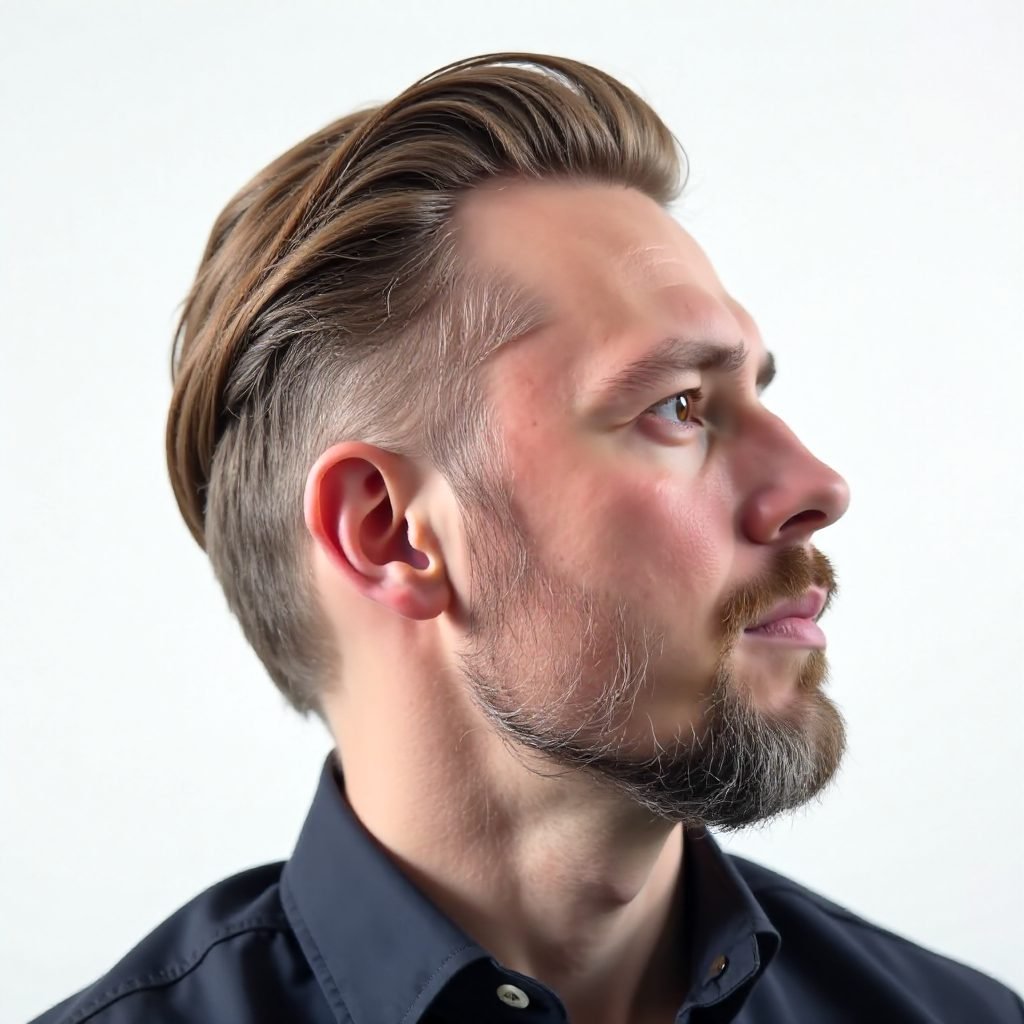
Height, sleek styling and structured sides make this pompadour a complete package. The voluminous top contrasts sharply with the low fade, and the extra height helps lengthen round or wide faces. Use a blow-dryer and pomade to build the lift.
Inspiration: @movement_barbershop
5. Two Shaved Lines

Cut uniformly short with a slight taper at the sides and nape, this style balances edge and polish. The back is shaped into a defined V, and two bold shaved lines provide the finishing touch. Touch up the lines every week or two to keep them sharp.
Inspiration: @arkadiabarberclub
6. Curly Crop

Stylist Arielle of LA salon Aanuko created this curly crop, noting that clients increasingly want to experiment with texture and length. Leaving more length on top shows off natural volume, while the fade around the ears keeps things neat and reduces daily styling.
Inspiration: @bossbabyblends
7. Straight Hair Fade
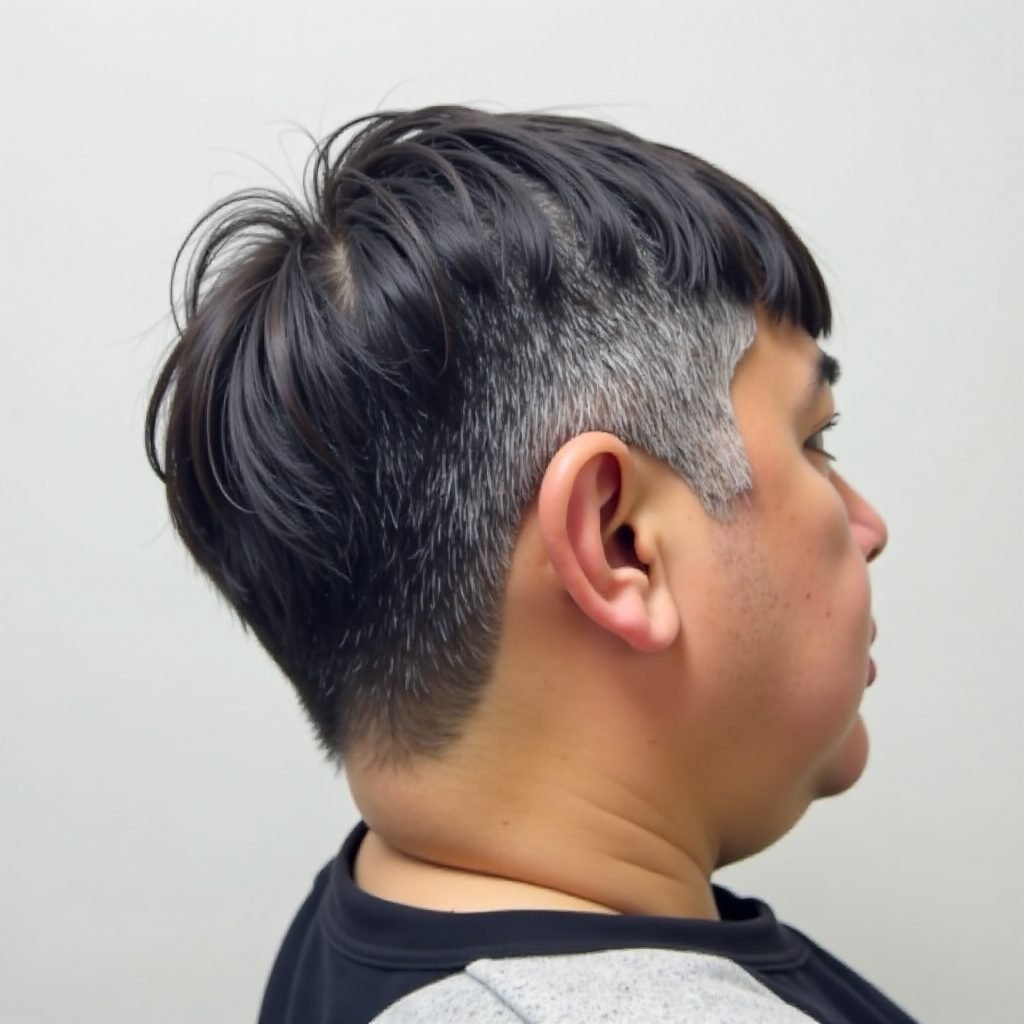
Pin-straight hair often lies flat, and a burst above the ear adds needed dimension and structure. Embracing your natural texture is the first step to a great cut. Straight hair shows regrowth quickly, though, so regular barber visits are a must.
Inspiration: @ajcutshair
8. Curly Mullet

Side fades and mullets are a natural pairing, as this curly version shows. The fade highlights the curl pattern while the length at the back complements it. Remember that curls shrink as they dry, so account for this when deciding how much to cut.
Inspiration: @bossbabyblends
9. Textured Top

A gradual fade follows the curve of the head, blending the tapered back and sides into a textured top. The barber has chosen a top length that brings out the hair’s natural texture. It is a clean, adaptable cut for everyday wear.
Inspiration: @coiffeur_lavie_wirges
10. Side-Part Hairstyle

A pronounced shaved part gives this classic side-parted style a contemporary edge. The low burst fade keeps the sides neat, and the defined part makes daily styling easier. It is a well-groomed option that suits both office and evening.
Inspiration: @morslibarber
11. Mohawk Hairstyle

The bold vertical strip of a mohawk stands out against the clean lines of a burst fade, creating a dynamic, edgy look. Height and volume on top can be styled into spikes or slicked back, depending on your mood.
Inspiration: @deleuteriohairstylist
12. Middle-Parted Style

Middle-parted hair emphasises facial symmetry and suits oval or diamond-shaped faces especially well. The low burst fade adds structure to the sides and encourages the fringe to frame the face naturally. A light cream keeps the curtains in place.
Inspiration: @rabysbarber
13. Curly Low Undercut with Fade

Curls are framed beautifully by a low fade and undercut, with a small squiggly design at the nape adding personality. Products made for curly hair help define the ringlets and reduce frizz. The design is subtle but gives the back real interest.
Inspiration: @emirsfade
14. Slicked-Back Hair

A slick-back paired with a side fade is highly adaptable. Smooth it down for a refined, formal finish or add texture for a more relaxed look. Trying different products, from shiny pomade to matte clay, lets you find the finish that suits you.
Inspiration: @chris.b.cuts
15. Edgar Haircut

Blunt, straight-across bangs contrast with a softly tousled silver top and a small side fade in this playful Edgar cut. Hairstylist Steven Tran nicknamed it a Super Saiyan Edgar, a nod to its transformative, anime-inspired energy.
Inspiration: @steventaotran
16. Mullet for Thick Hair

Thick hair can blur the lines of a fade and create unwanted bulk. Show your barber reference photos and explain clearly what you want. When the hair is properly thinned, this mullet keeps its crisp shape for longer.
Inspiration: @fadeline.barbers
17. Ivy League Haircut

A low burst fade gives the classic Ivy League cut a modern update. The slightly longer top can be slicked back, side-combed or tousled, while the fade keeps the ears and nape tidy. A versatile, smart choice for professional settings.
Inspiration: @leon_barber
18. Fade with Diagonal Lines

Tightly coiled hair is cropped close into a rounded shape, with the fade helping to elongate the face. Three evenly spaced diagonal lines add a crisp, graphic finish. Moisturising products keep coils soft and healthy.
Inspiration: @kayzplace
19. Taper Mohawk Cut
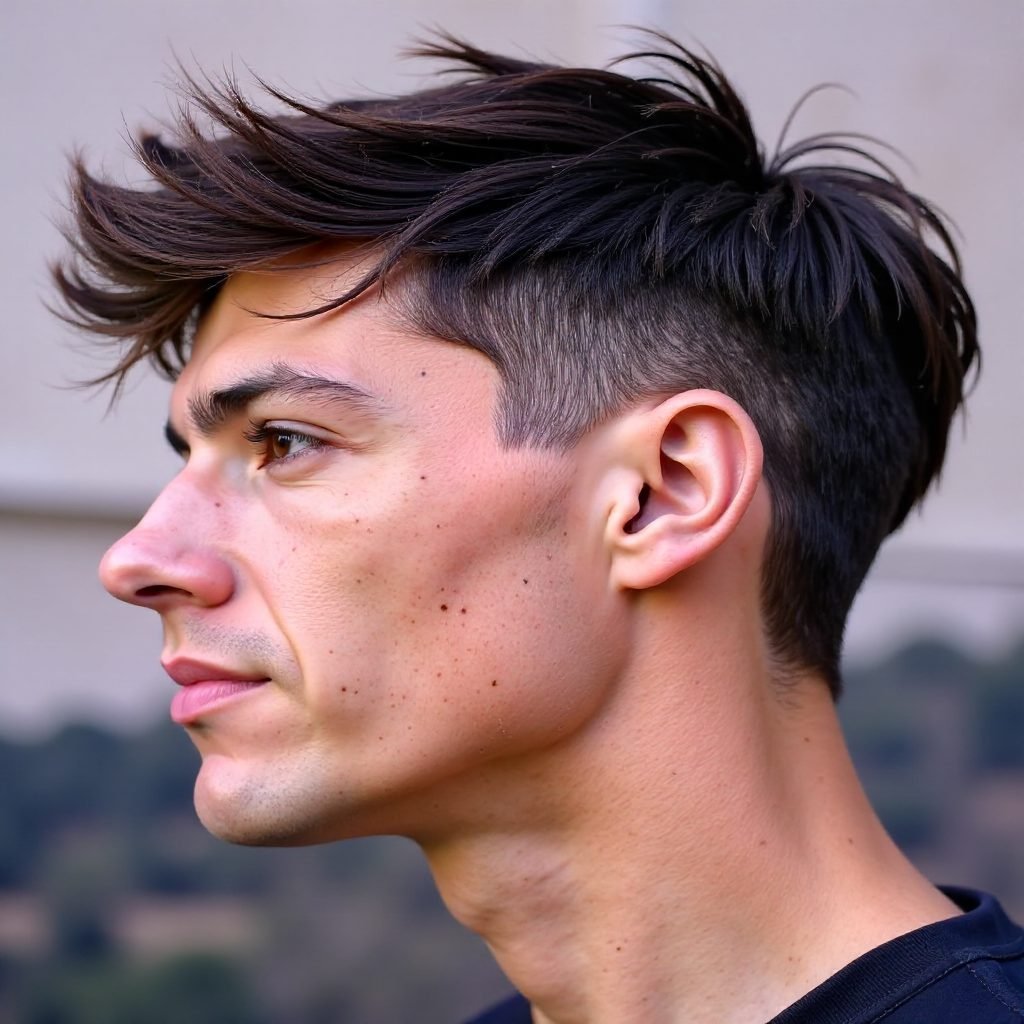
Unlike a classic mohawk with shaved or stubble sides, this tapered faux mohawk uses a fade for a softer result. It can be spiked for an edgy look or smoothed down for something more polished, making it easy to adapt to different occasions.
Inspiration: @londonschoolofbarbering
How to ask for a low burst fade
Use the phrase “low burst fade” and point to where you want the curve to start, usually just above the top of the ear. Specify how short the fade should go at its lowest point (skin, zero or a number one guard) and what happens at the back: a full taper, a V-shaped nape or length left for a mullet. If you want shaved lines or a design, say so at the start so the barber can plan the fade around it.
Keeping the curve crisp between cuts
- Low fades lose definition after about two to three weeks; book clean-ups on that schedule.
- Curly tops need a leave-in conditioner and curl cream to stay defined and frizz-free.
- Straight hair that lies flat holds a pompadour or slick-back better with a pre-styling spray and a blow-dry.
- Thick hair should be thinned through the sides so volume doesn’t blur the fade line.