
“Fade” covers a whole family of cuts, and the differences come down to where the blend starts, how short it goes and what shape it follows around the ear. This guide walks through fifteen versions side by side: classic low, mid and high fades, their gentler taper counterparts, the curved drop fade, the rounded burst fade, ultra-short skin and bald fades, plus the temple, undercut, shadow, curly and afro taper styles.
Knowing the vocabulary makes a barber visit far easier. A low fade keeps most of the hair at the sides and looks conservative enough for a formal office. A high or bald fade exposes more scalp for strong contrast. Tapers only clean up the sideburns and neckline, so they grow out gracefully and suit men who don’t want frequent appointments.
Hair type matters too. Curly and coily textures benefit from burst fades and afro tapers that frame the volume on top, while men with thinner hair often find a shadow fade or short skin fade makes density on top look greater.
1. Low Fade

Wavy hair on top with a low fade that tapers only the lower temples and nape. Starting the blend just above the natural hairline behind the ears gives a hint of edge while keeping the overall look professional and conservative.
Inspiration: @simonalassia.ar
2. Mid Fade

A mid fade begins around eyebrow level at the temples, trimming the sides tighter and gradually lengthening towards the crown. It’s commonly combined with short textured tops, but a classic French crop pairs with it just as well.
Inspiration: @gfpeluqueros
3. High Fade

Sharp and dramatic, a high fade takes the short section up close to the crown, creating maximum contrast with the hair on top. Paired here with a clean beard, it still looks tidy as it grows, so barber visits don’t have to be constant.
Inspiration: @street_barbershop03
4. Low Taper Fade

Rather than fading the whole side, a low taper only shortens the temples and the nape towards the hairline. The remaining hair is lightly trimmed and textured, here with a choppy fringe, and it needs even fewer touch-ups than a low fade.
Inspiration: @estil_boig
5. Mid Taper Fade

Starting about an inch above the ears, a skin fade blends into tapered temples and neckline. Leaving the crown longer and slightly messy exaggerates the contrast and shows off how thick and dense the top is.
Inspiration: @rensblends
6. High Taper Fade
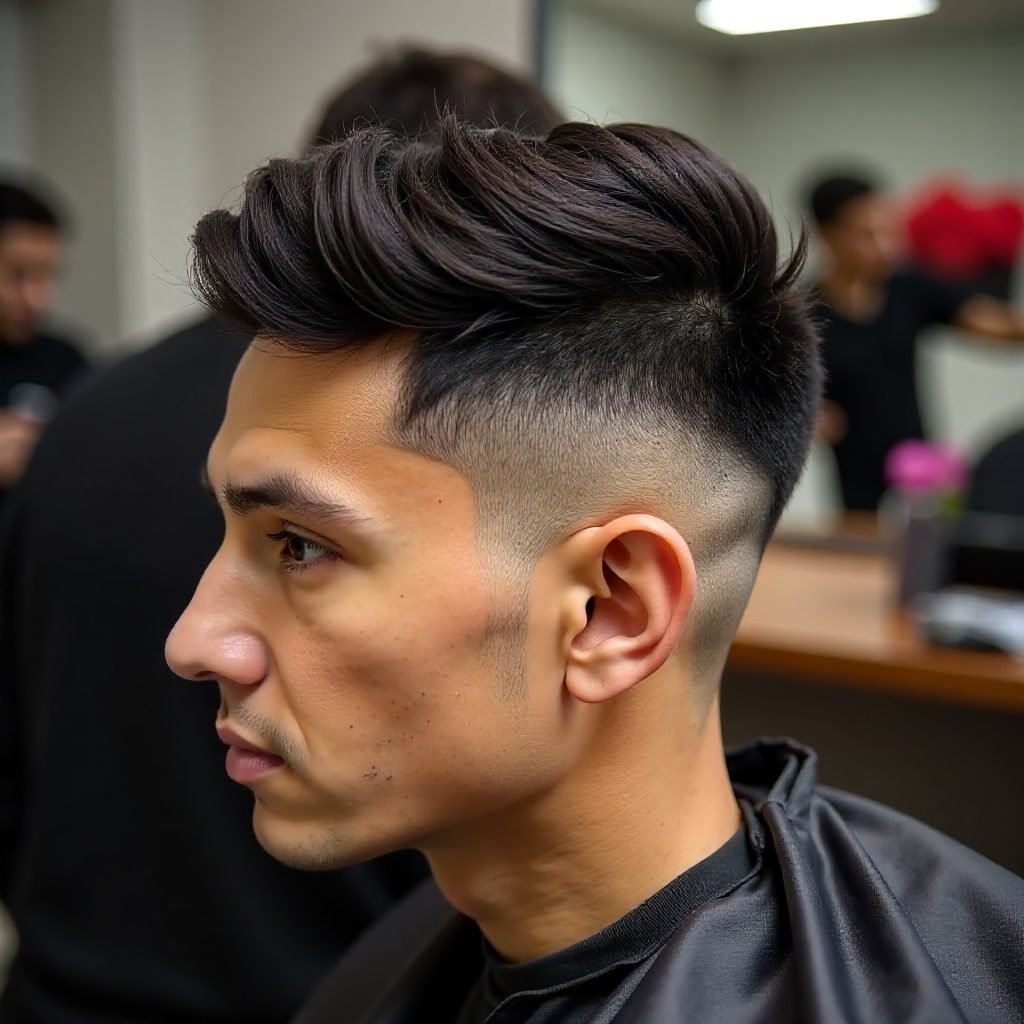
Coily hair looks crisp with a high taper fade that cleans up the edges while keeping the shape on top. It works equally on straight, wavy and tightly textured hair; regular trims are what keep that sharp outline looking fresh.
Inspiration: @zohnabeauty
7. Drop Fade

Like a mid fade, a drop fade starts near the brows but dips lower towards the nape behind the ear, forming a curved arc. The longer top offers styling flexibility; a textured fringe can shorten a tall forehead or soften a square jaw.
Inspiration: @barbeariadofael_
8. Skin Fade
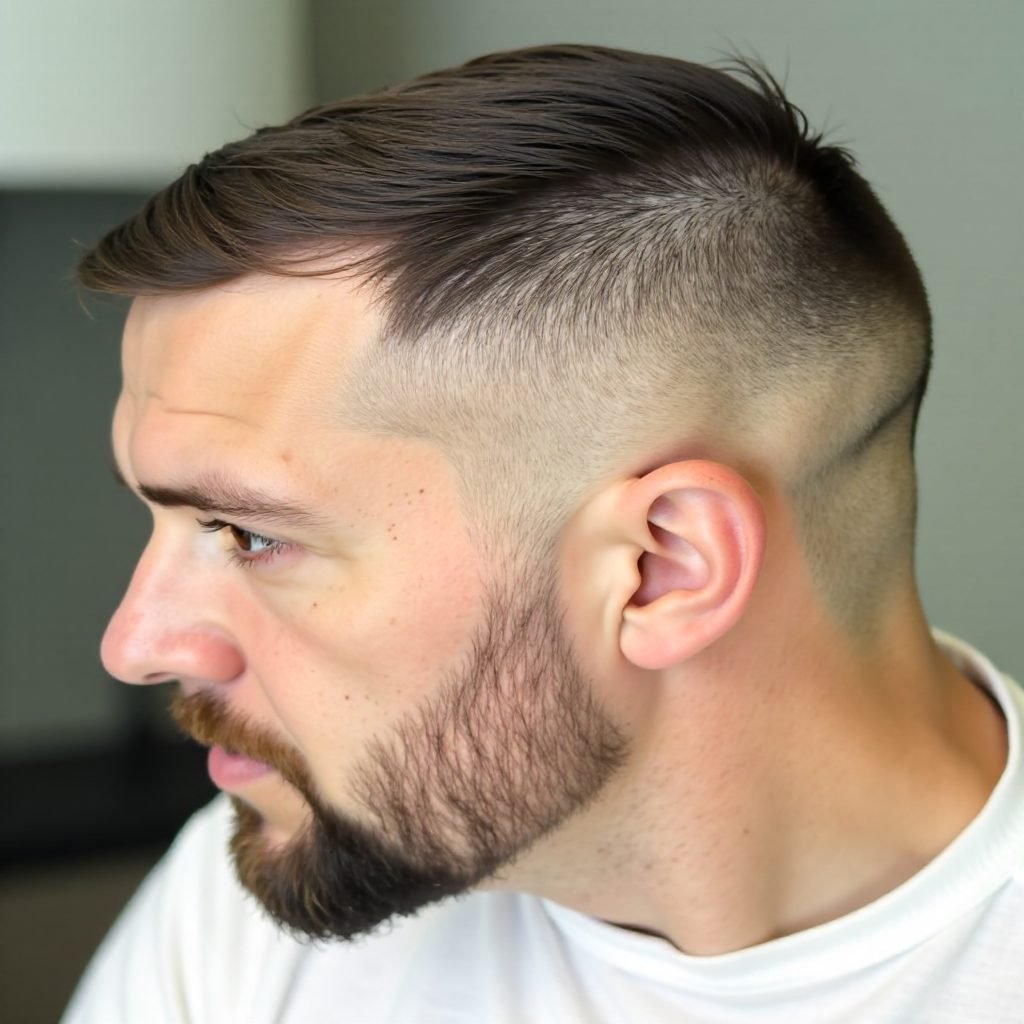
Sides and back are clipped down to almost nothing, with a little length left at the very top that blends smoothly into the faded areas. Paired with facial hair, this bald fade is bold and highly distinctive.
Inspiration: @nunez.the.barber
9. Bald Fade

A very high skin fade blends right up to the top of the head, producing an ultra-clean, high-contrast finish that stands out. It pairs naturally with buzz or crew cuts, though longer slicked-back tops are another stylish option.
Inspiration: @hairnowny
10. Burst Fade

Curving in a semicircle around the ear, a burst fade frames voluminous curls on top. For naturally curly or wavy hair it makes the texture the focal point, while the back can be left longer for a mohawk-like profile.
Inspiration: @starz2sharp
11. Temple Fade

Closely cropped sides melt into the skin at the temples, creating a fade that balances boldness and polish. Style the top neatly for formal occasions, or rough it into spikes with matte clay or pomade for a more casual feel.
Inspiration: @sonoilpar
12. Undercut Fade

High contrast defines an undercut fade, with a longer top sitting over faded short sides. The shaved section needs regular maintenance, but asking for a fade on the sides with length on top allows a different style almost every day.
Inspiration: @sarah_styles19
13. Shadow Fade

Men with thin hair can benefit from a shadow fade: very short at the bottom, blending into a slightly longer area around the temples and then into the top. Skin is never fully exposed, so the effect is soft and shadowy rather than stark.
Inspiration: @rachel.mac.hair
14. Curly Fade

Curly hair becomes easier to manage and define when the sides are faded down to zero. Choose a high, mid or low fade depending on how much contrast you want between the shaved temples and the curly top.
Inspiration: @davila.art1
15. Afro Taper

A taper fade around an afro shapes natural curls and keeps the outline neat, making daily care simpler. Fades are a favourite for textured hair, and a shaved design in the tapered area can make it even more personal.
Inspiration: @mano_peu_
How to describe the fade you want
Barbers interpret terms slightly differently, so give them specifics:
- Starting height: just above the ear (low), at temple or eyebrow level (mid), or near the parietal ridge where the head curves (high).
- Shortest length: skin or foil shaver for a bald fade, or a guard number such as 0.5 or 1 if you prefer a shadow.
- Shape: straight around the head, curving down behind the ear (drop), or rounded around the ear only (burst).
- Top length: how many centimetres or inches you want kept, and how you’ll style it.
Keeping the blend sharp
Skin and high fades lose definition fastest and usually need a tidy-up every two to three weeks. Low fades and tapers can go four to six. Between visits, moisturise the scalp if it’s exposed, use SPF on shaved areas in summer and pick a product that matches the top: matte clay for texture, pomade for slick styles, curl cream for afro and curly fades.