
The modern mullet keeps the signature idea of extra length at the back but pairs it with a clean fade on the sides, so the shape looks sharp rather than retro. These fifteen cuts show how flexible that formula is: a curly French crop mullet, a shaggy wolf-style cut with a temple undercut, a permed faux hawk, an Edgar version with disconnected sides, a slicked-back cut on straight hair, a burst fade quiff, and long curly mullets that lean fully into texture.
Texture decides a lot. Straight hair shows the line between fade and length very clearly and suits slick or quiffed styling. Wavy hair gives the back natural flow, while curls add volume up top and soften the contrast of a skin fade. Face shape matters too: a longer fringe can balance an oblong face, and a beard helps round out a square jaw.
Upkeep is mostly about the fade. The longer sections can go weeks between trims, but sides lose definition quickly.
1. French Crop Mullet
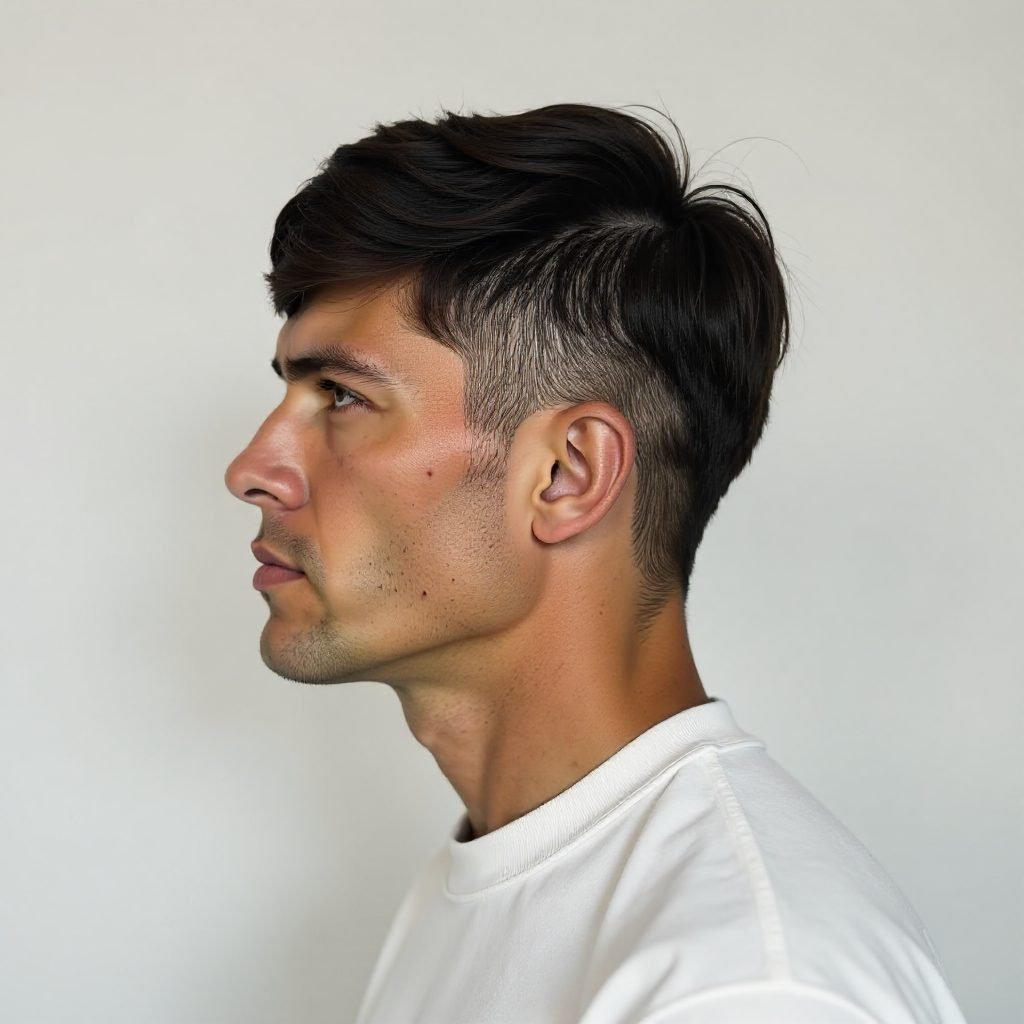
A French crop meets mullet styling here: the top and back are left at a similar length to show off choppy curls, while a low fade blends the sides down cleanly. It gives a classic short cut an edgier outline that works for men of any age.
Inspiration: @woolf.kingsx
2. Shaggy Mullet with Undercut
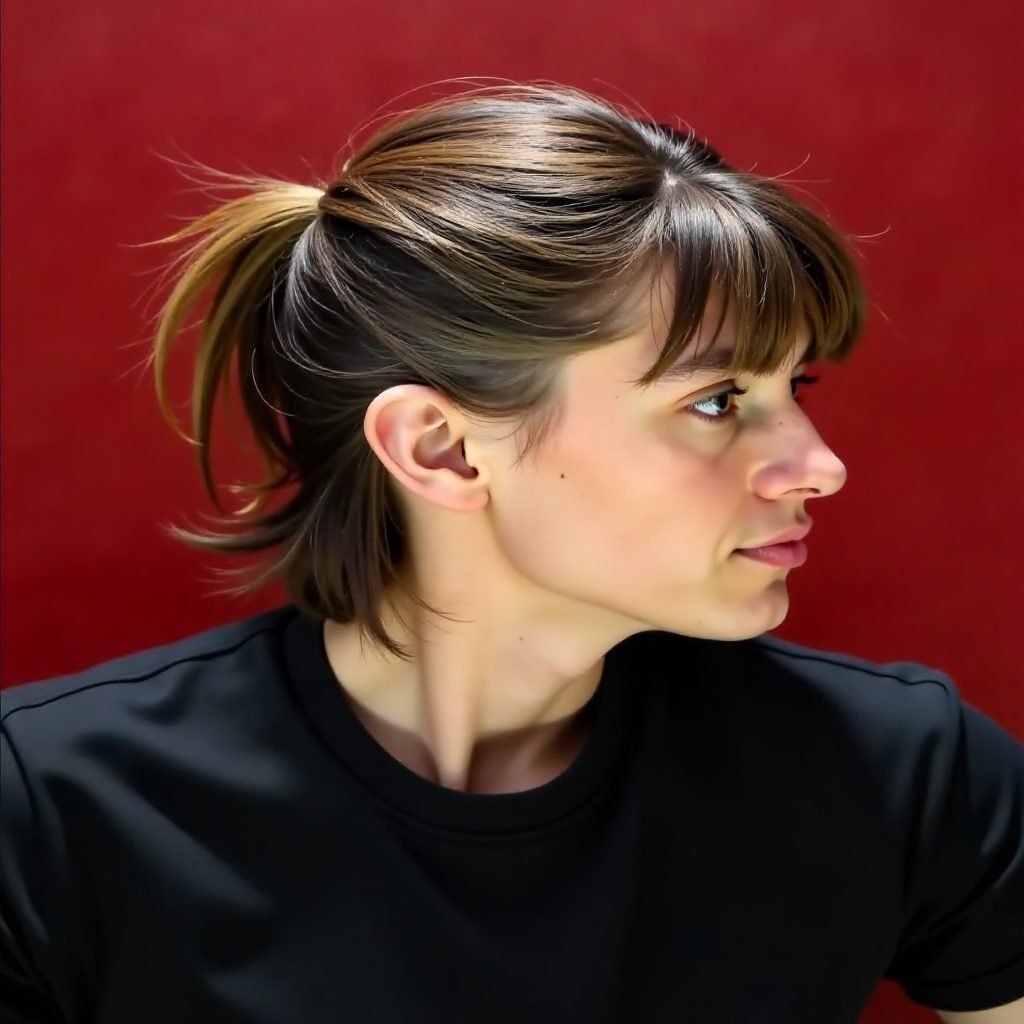
Stylist Alessandro Bonetto gives this wolf-style mullet a rave-inspired edge with a dramatic disconnect at the temple. Shaggy, tousled layers and a long, textured fringe sit above the undercut, making it a creative pick for anyone wanting a strong statement cut.
Inspiration: @bons.hair
3. Faux Hawk Mullet
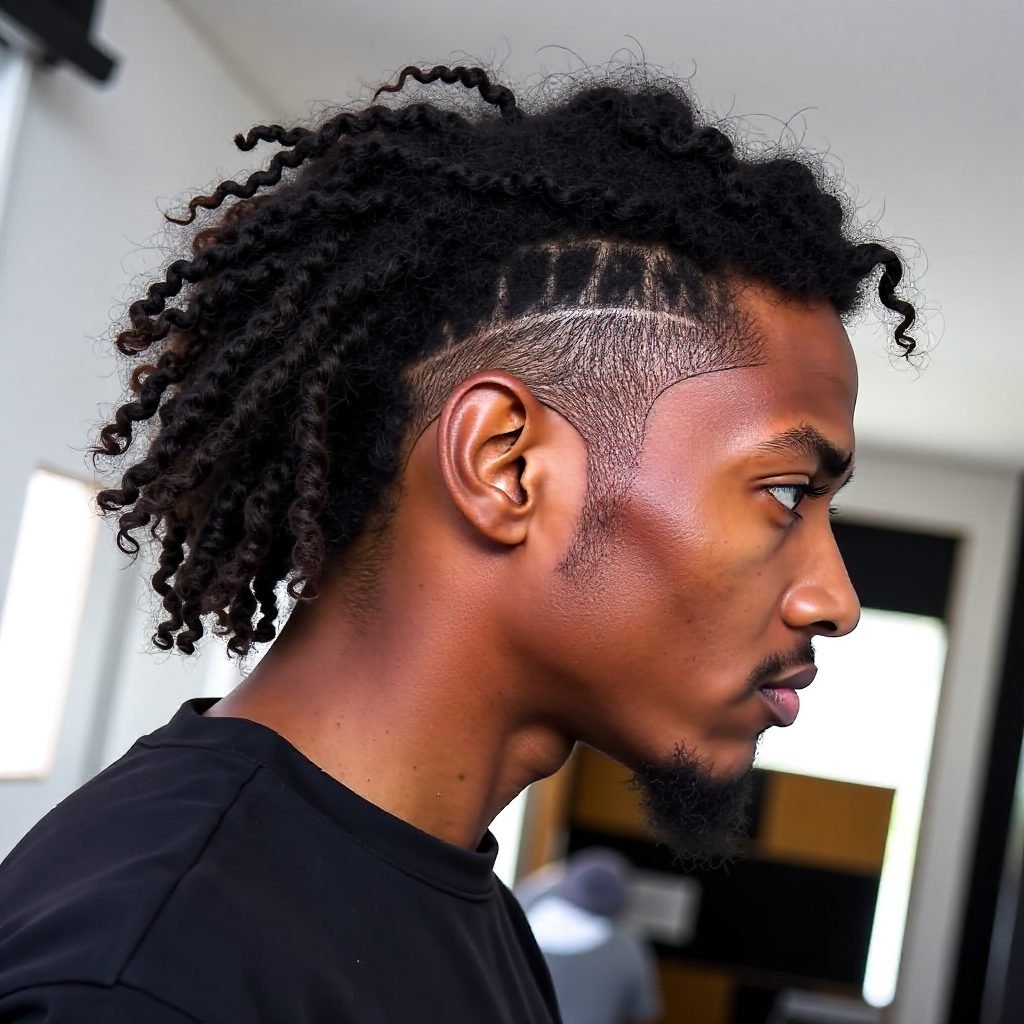
Permed curls are concentrated in a long strip through the centre, with a skin fade at the temples, so the mullet reads like a stretched-out faux hawk. Scrunch in a curl cream while damp to give the curls definition and shape.
Inspiration: @omithebarber_
4. Curly Edgar Mullet
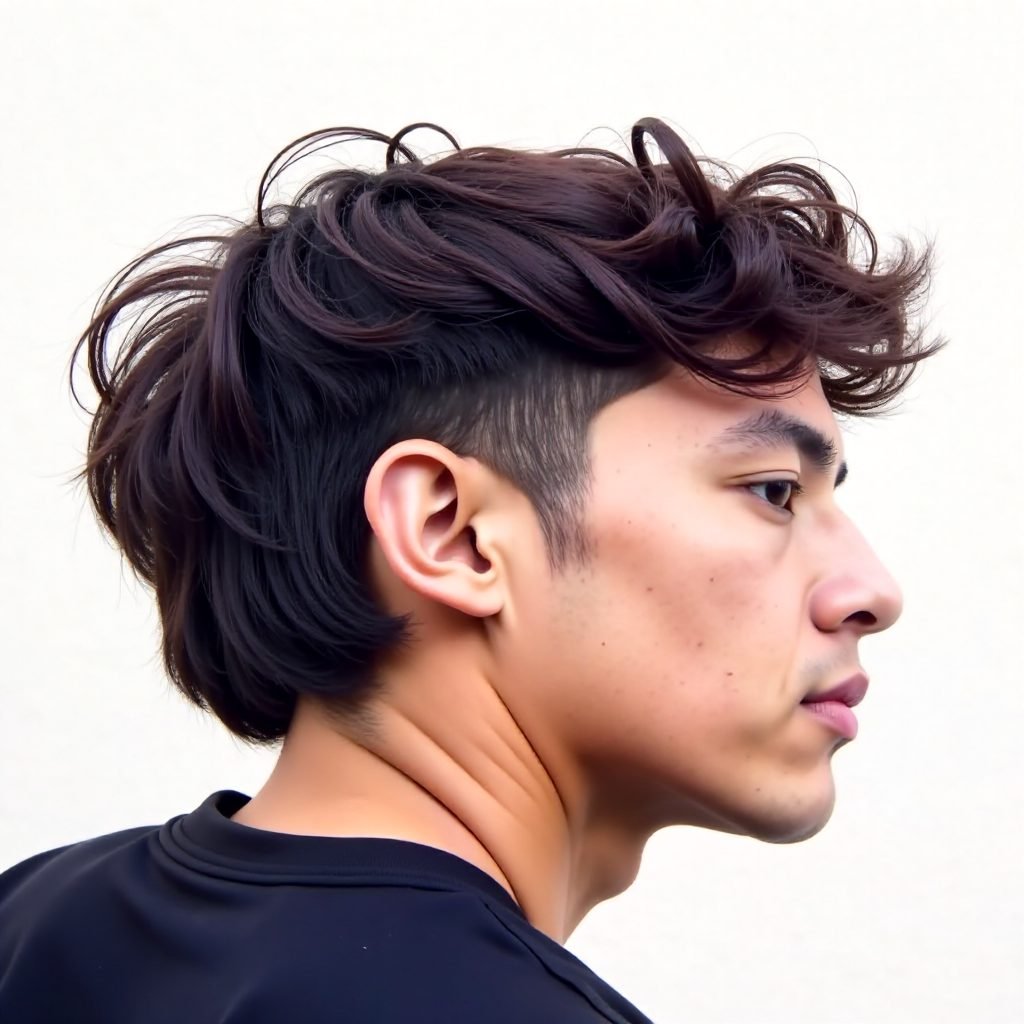
Curly hair gets an Edgar-style mullet with a heavy fringe, longer back and disconnected faded sides for strong contrast. The long front and back help shorten the look of an oblong face, bringing better balance to the features.
Inspiration: @leandrogonzalez.lg
5. Wavy Pomp with Drop Fade
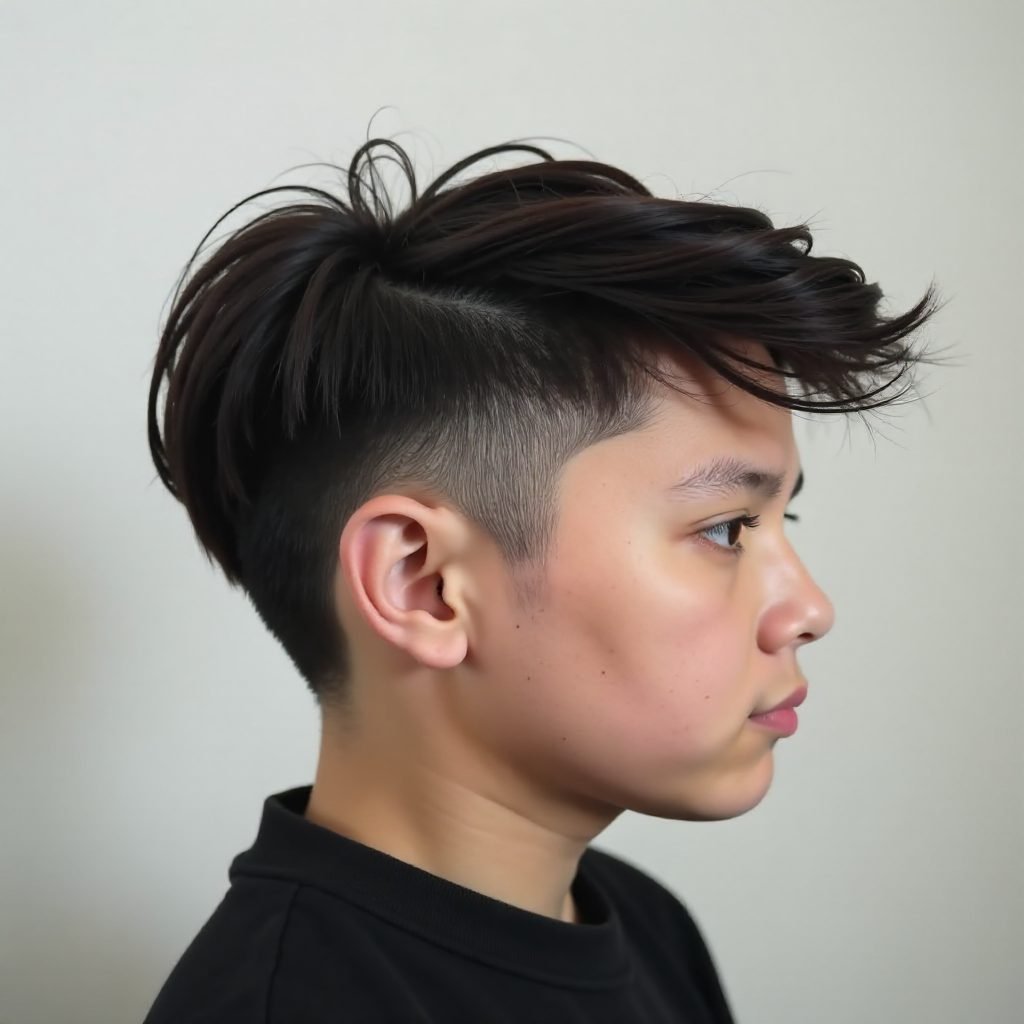
A wavy pompadour on top sits over a drop fade, giving the mullet a more refined, softer feel. The fade makes the voluminous top stand out; blow-dry the front upward with a round brush and finish with a light cream to keep waves defined.
Inspiration: @mohamedandramy
6. Mohawk Fade with Long Fringe
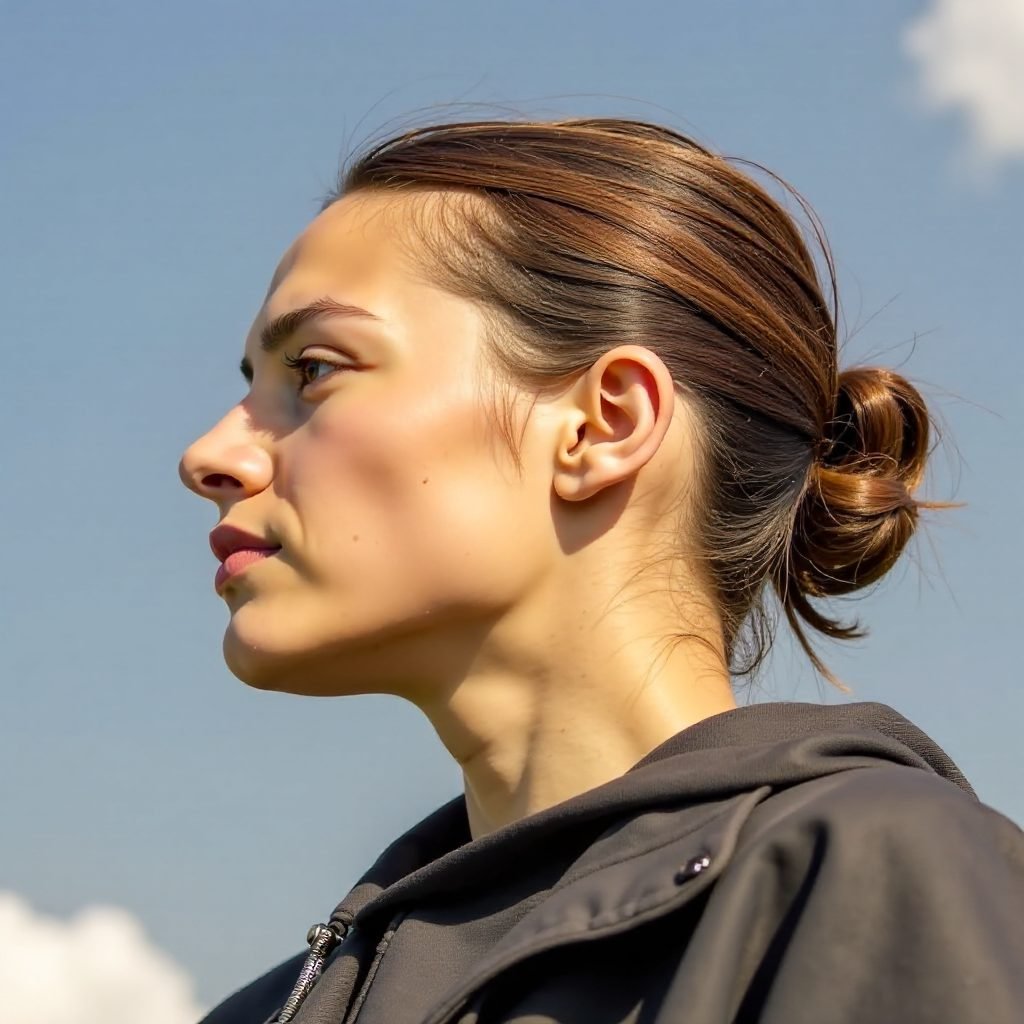
A long fringe and a central stripe of longer hair recall a mohawk, while the sides are shaved short around the ears for contrast. Heavy texturizing keeps it from looking blocky; work in a matte clay and style it flat or spiked.
Inspiration: @barberfirmat
7. Classic Mullet with Textured Quiff
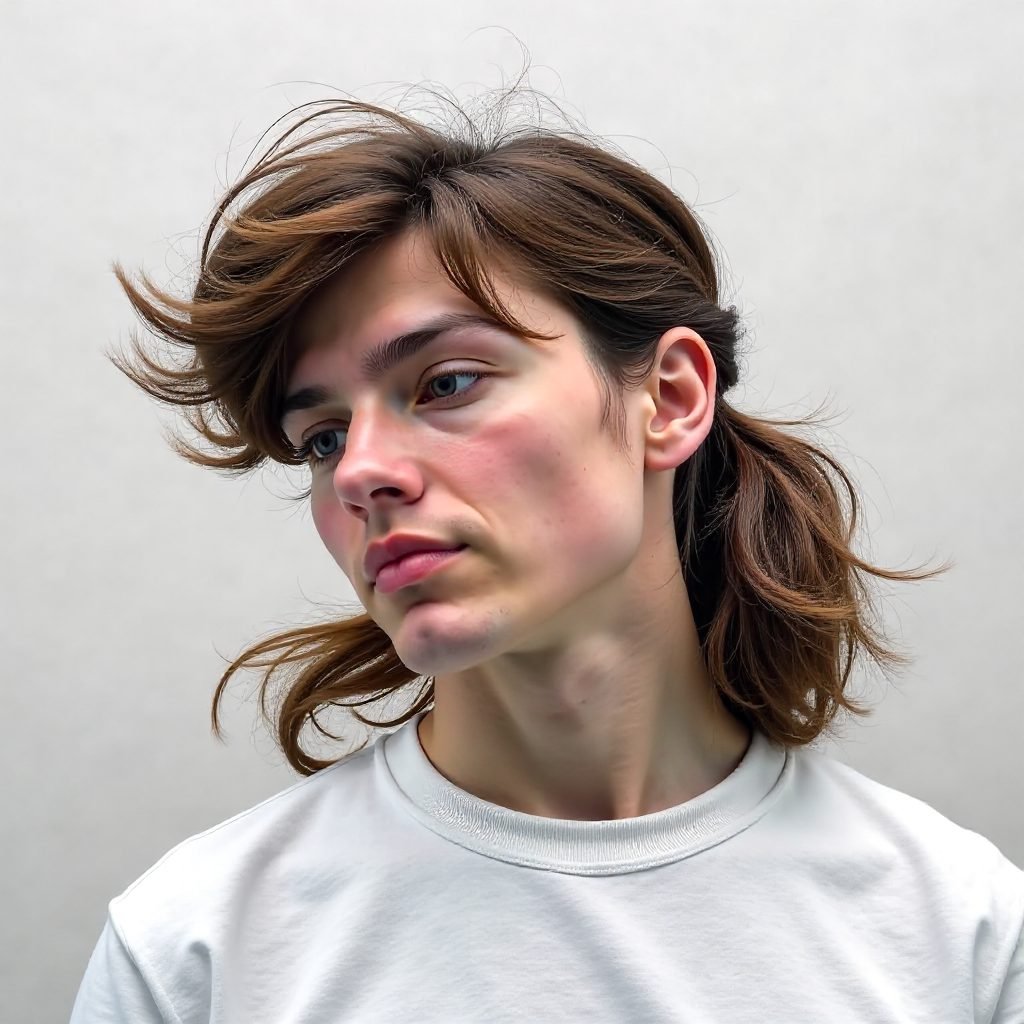
Instead of the classic short front, this mullet keeps extra length on top for a messy, textured quiff. Rough-dry, then push the hair up with clay or gel for a spiky finish, while closely faded temples sharpen the contrast.
Inspiration: @il.magri
8. Slick-Back Mullet
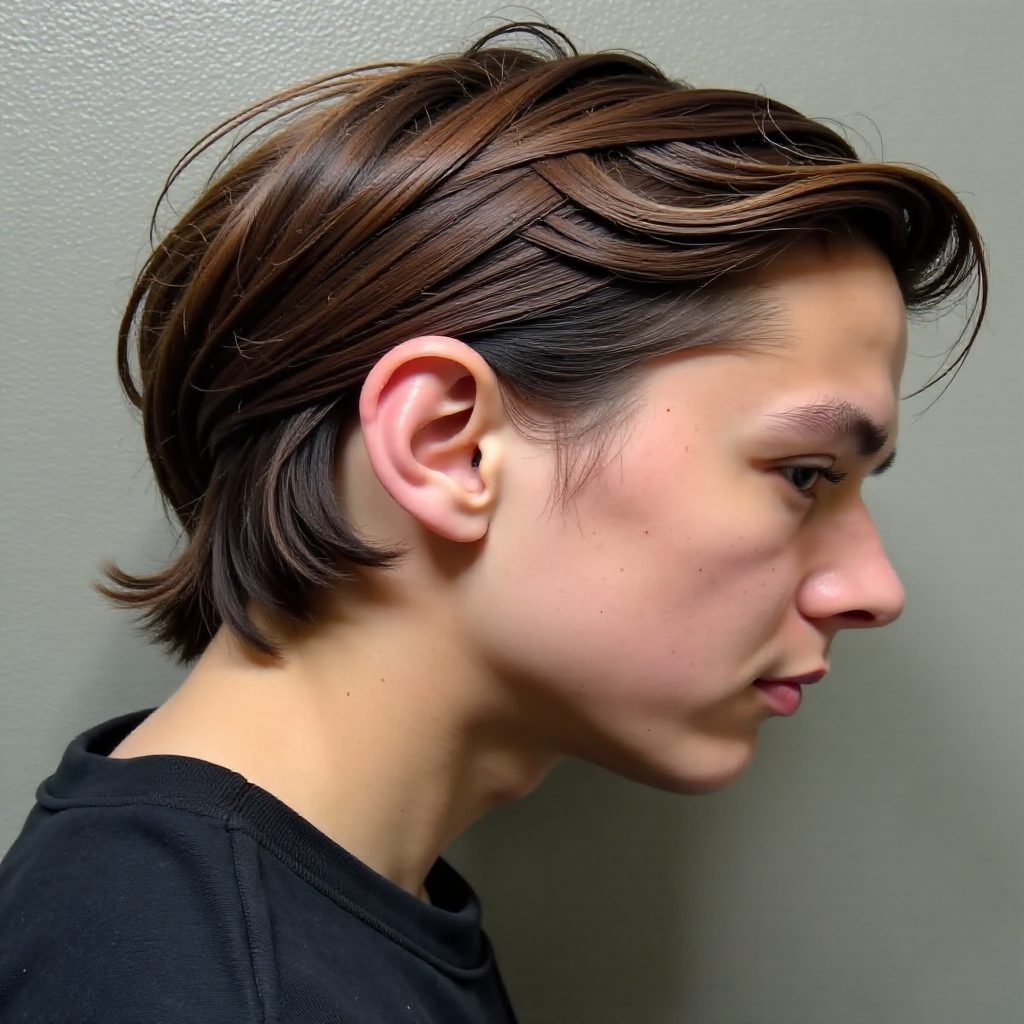
Straight hair is slicked back over subtly faded sides, with the trademark longer length resting at the nape. For a clean, polished finish, rake gel or pomade through damp hair with a wide-tooth comb in the direction you want it to sit.
Inspiration: @kapsalonhaarvisie
9. Burst Fade Quiff Mullet
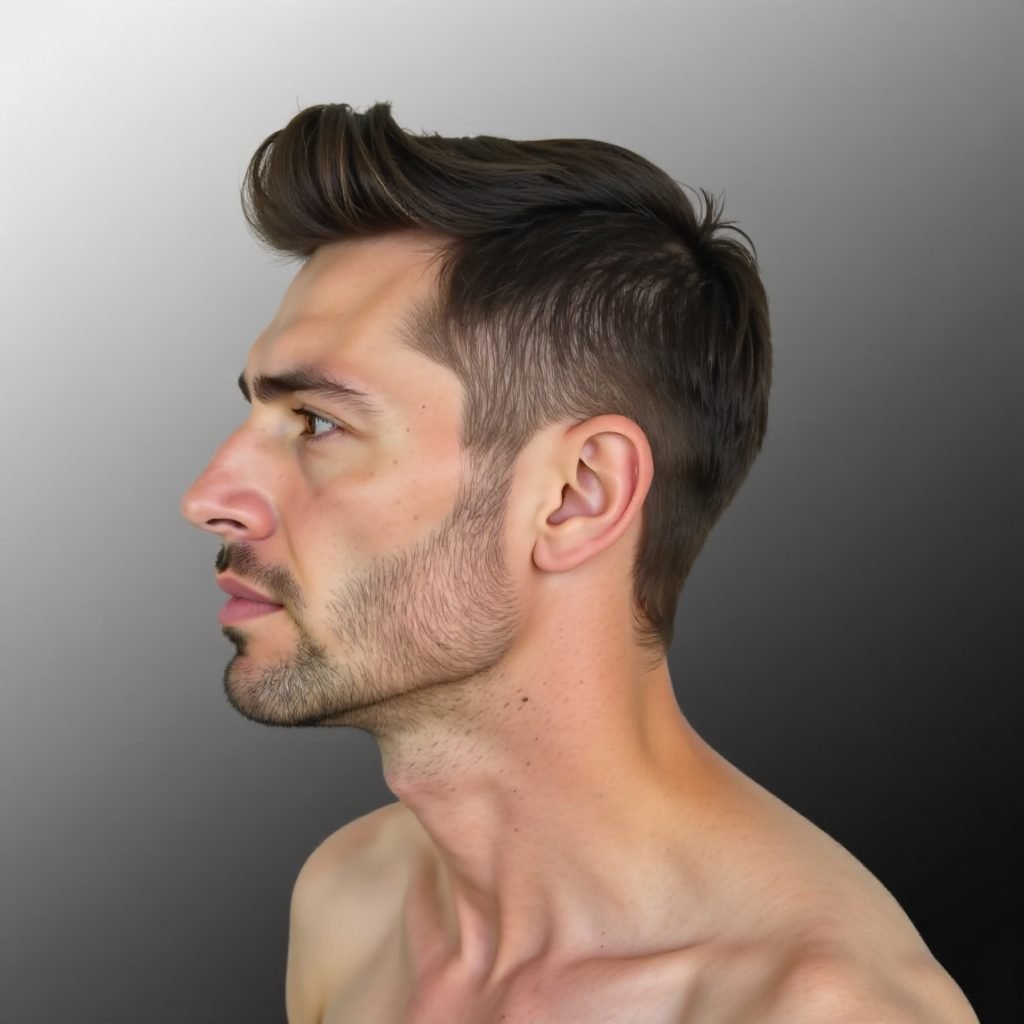
For short, straight hair, a compact quiff replaces a fringe and sits above a burst fade that curves around the ear. Adding a groomed beard and moustache gives the short mullet more definition and room to experiment with facial hair.
Inspiration: @ryderjesshair
10. Permed Mullet with Tapered Sides
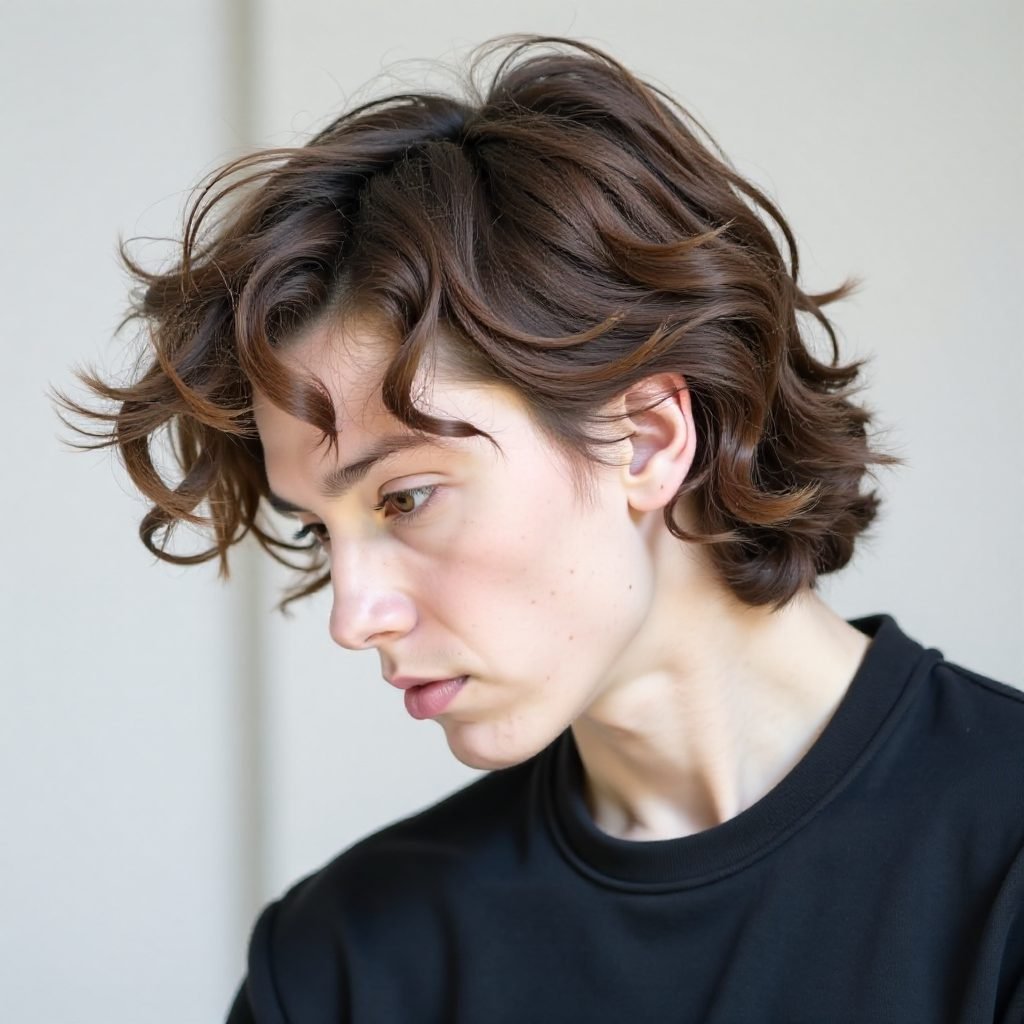
A semi-permanent perm adds bouncy curl to the fringe and back, while the sides are tapered close. It is an eye-catching twist for anyone tired of standard mullets; a curl cream and diffuser help keep the permed texture springy.
Inspiration: @brodiethebarber_
11. Skin Temple Fade Mullet
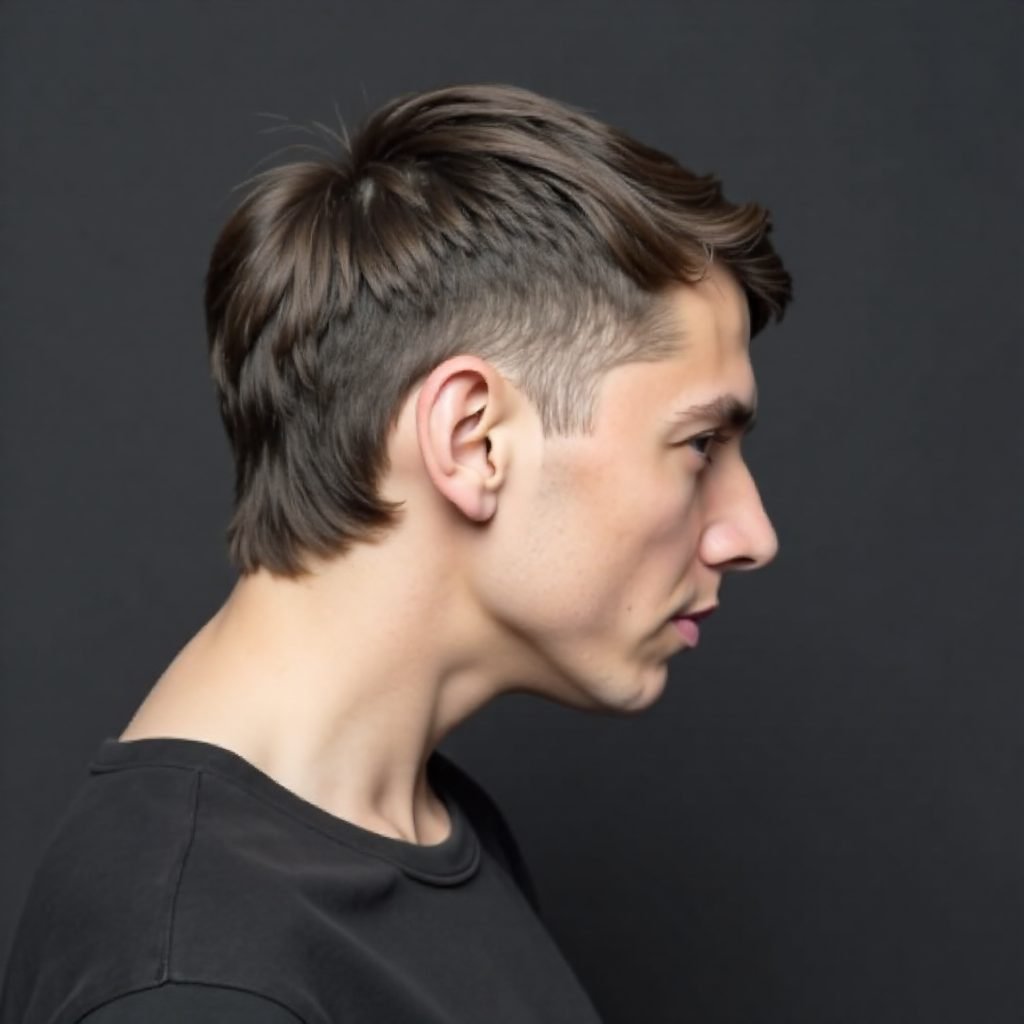
Not enough length for a full mullet? A shorter version with a skin temple fade still creates the shape, because clearing the sides makes the back look longer. It suits most hair types and is easy to grow out.
Inspiration: @evonik__
12. Low Fade Mullet with Full Beard
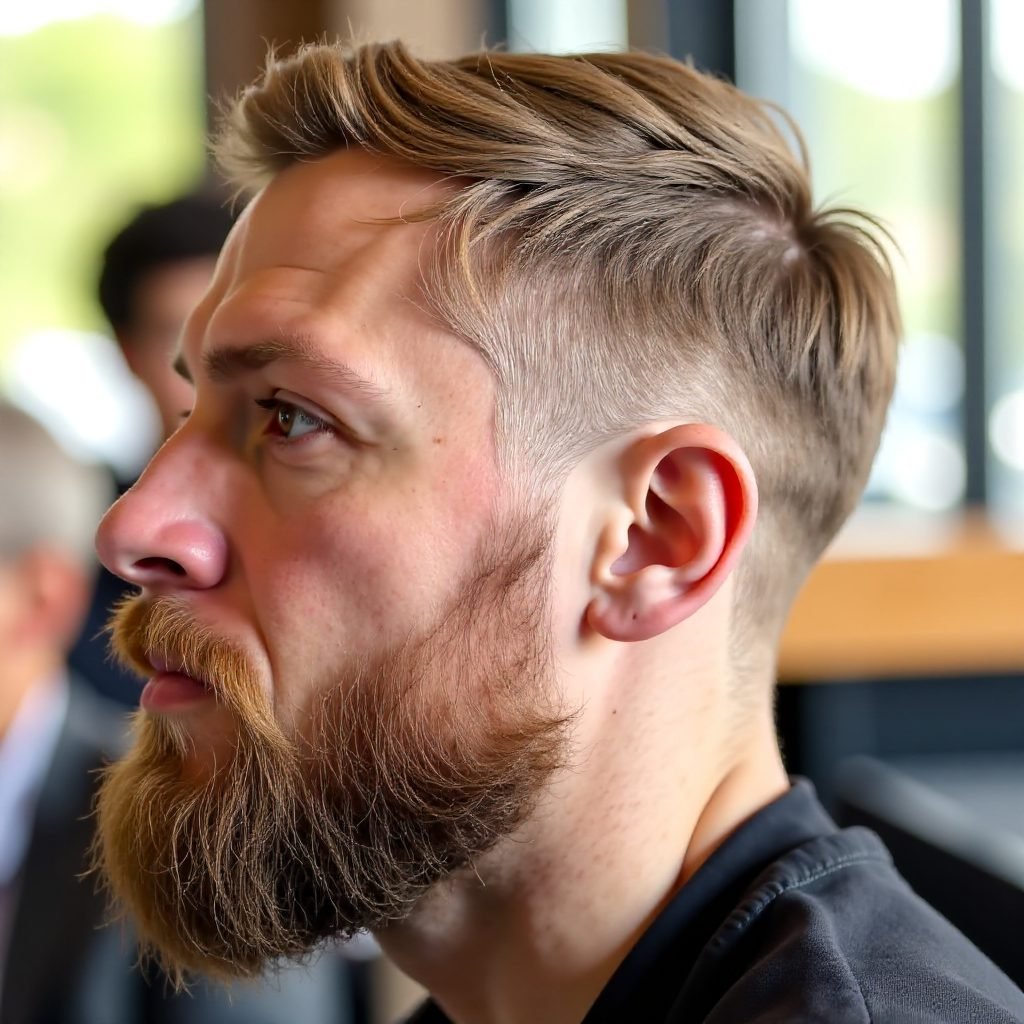
A tapered mullet pairs with a full beard, which helps soften and round out a square face. The beard does not need to be this long; any comfortable length works, provided it is trimmed, shaped and conditioned regularly.
Inspiration: @barbershopdepraatkamer
13. Mod Mullet
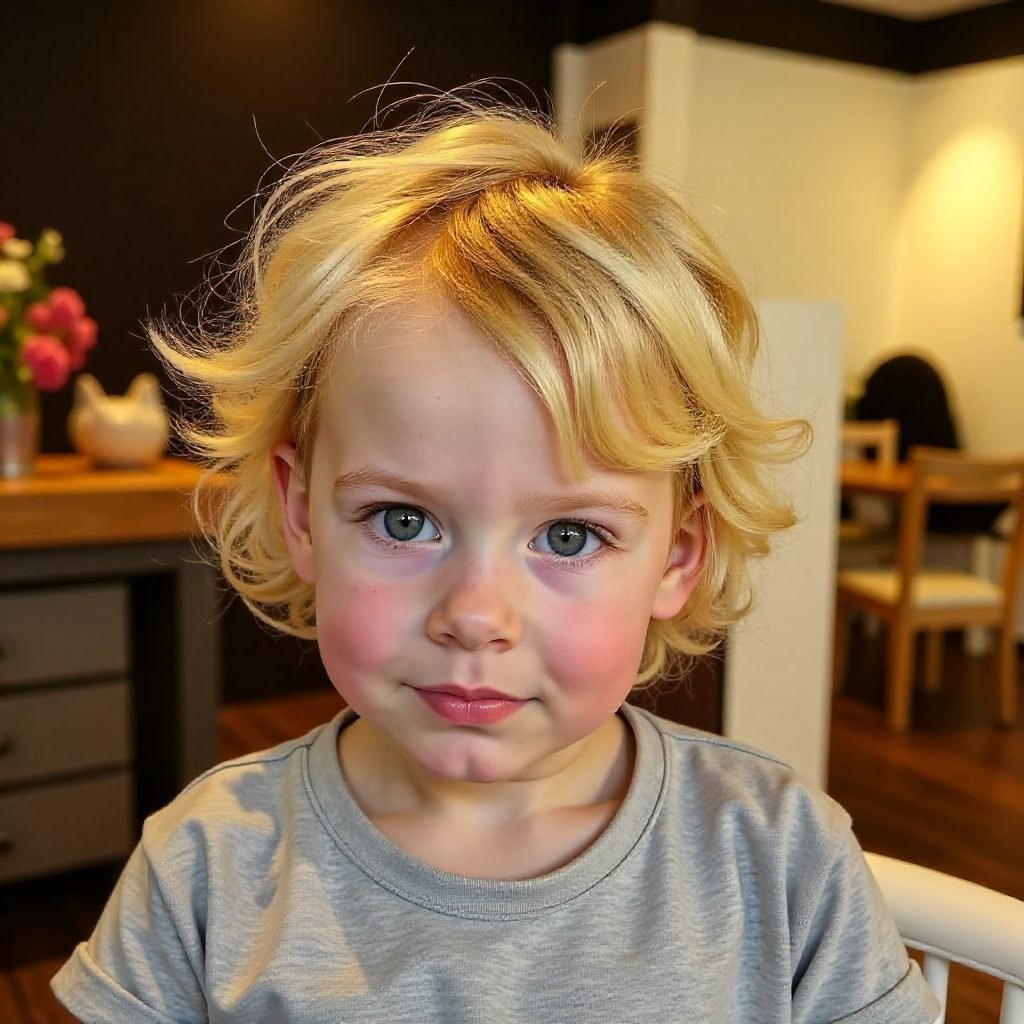
This cut blends a mod-style fringe at the front with a mullet at the back, and bleaching it to a bright blonde pushes it into trend territory. Lightened hair needs a purple shampoo and bond-repair treatment to stay bright and strong.
Inspiration: @marydoesyourhairy
14. Curly Mullet with Temple Fade
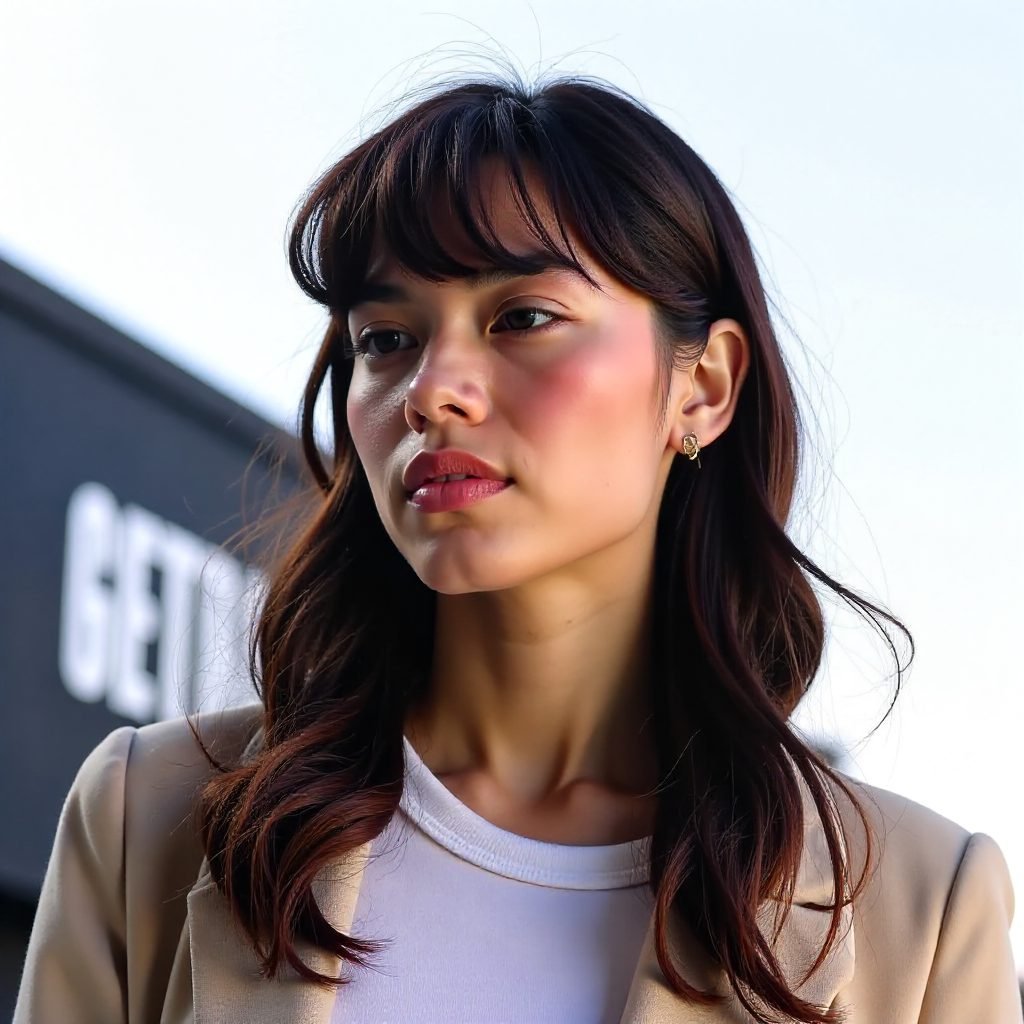
Long, spiralled curls fall to the shoulders while a temple fade keeps the sides crisp. Caring for the curls is the real key here: apply curl gel or cream to wet hair and dry with a diffuser for springy, defined results.
Inspiration: @leandrogonzalez.lg
15. Short Mullet with Skin Taper
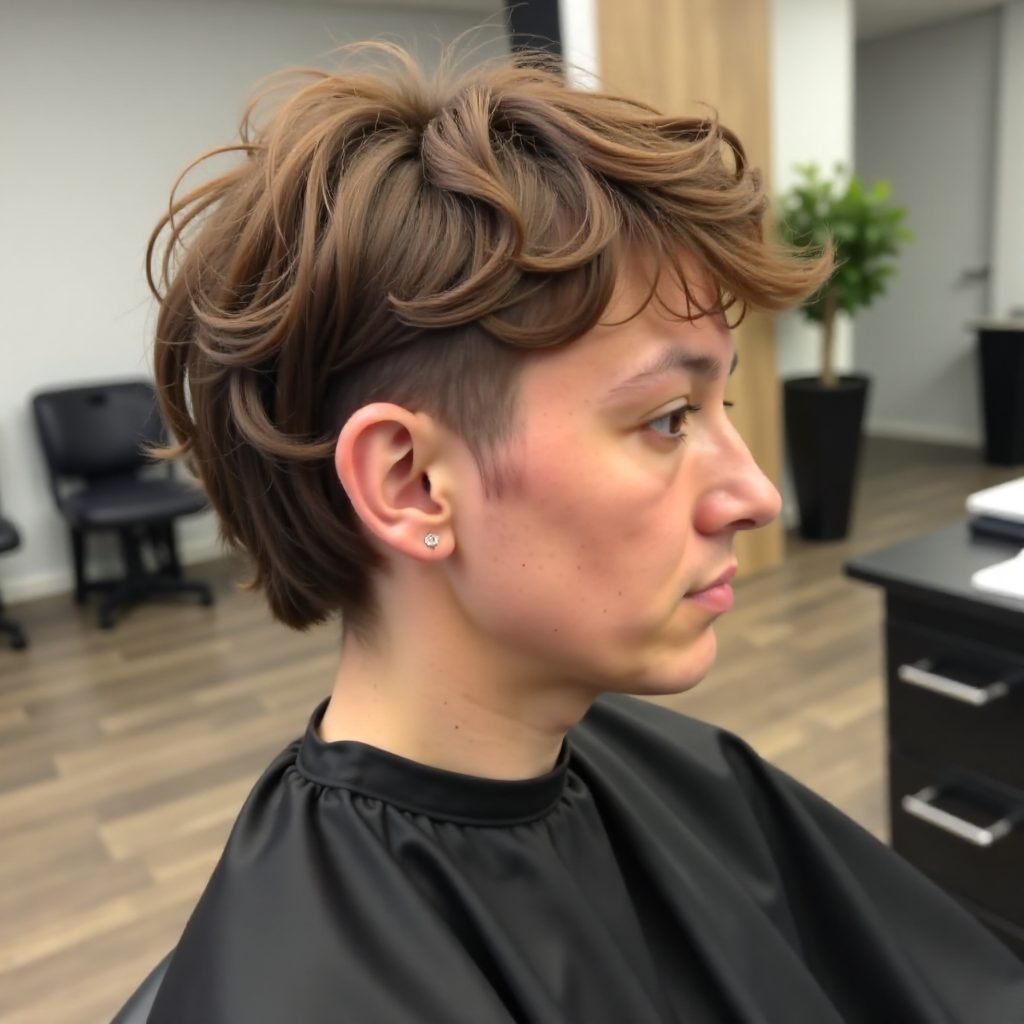
Thick hair benefits from layering that removes bulk, especially on top. This short, shaggy mullet with a skin taper does just that, lightening the weight while the faded sides keep the overall shape neat and modern.
Inspiration: @legacy.barbers
Choosing between low, drop, burst and temple fades
- Low fade: starts just above the ears; the most subtle option and easy for office settings.
- Drop fade: dips down behind the ear, which flows naturally into the longer back of a mullet.
- Burst fade: curves around the ear and leaves length at the nape, the classic pairing for a mullet.
- Temple fade: clears only the area around the temples, keeping most of the side hair for a softer silhouette.
Getting the back length right
Bring a photo that shows the back, not just the front, because barbers interpret mullet length very differently. Ask how much should sit below the collar and whether the back should be blunt or textured with point-cutting. Growing into a full mullet usually takes a couple of months, so ask the barber to keep the sides tight while the back is left untouched. Refresh the fade every two to three weeks, and use a curl cream or light clay depending on your texture to keep the length looking intentional.