
Walking into a barbershop and asking for “short on the sides” can produce wildly different results. This guide puts a name to the most common men’s cuts so you can point to exactly what you want. It runs from the tidiest military-inspired options, such as the buzz cut, crew cut and Ivy League, through every height of fade, to longer styles like the man bun, medium-length flow and dreadlocks.
Several cuts here differ only in small details. A quiff and a pompadour both lift the front, but the pompadour needs more length and a smoother, swept-back finish. An undercut is disconnected from the top, while a taper blends gradually. Knowing these differences helps you and your barber agree before the clippers come out.
Hair type should guide the shortlist. Thick, wavy hair suits longer cuts and textured tops; tight curls look great over a low fade; fine hair often looks fuller in a short crop or Caesar. Upkeep varies too, with skin fades and flat tops needing frequent trims and long styles needing far fewer.
1. The Ivy League
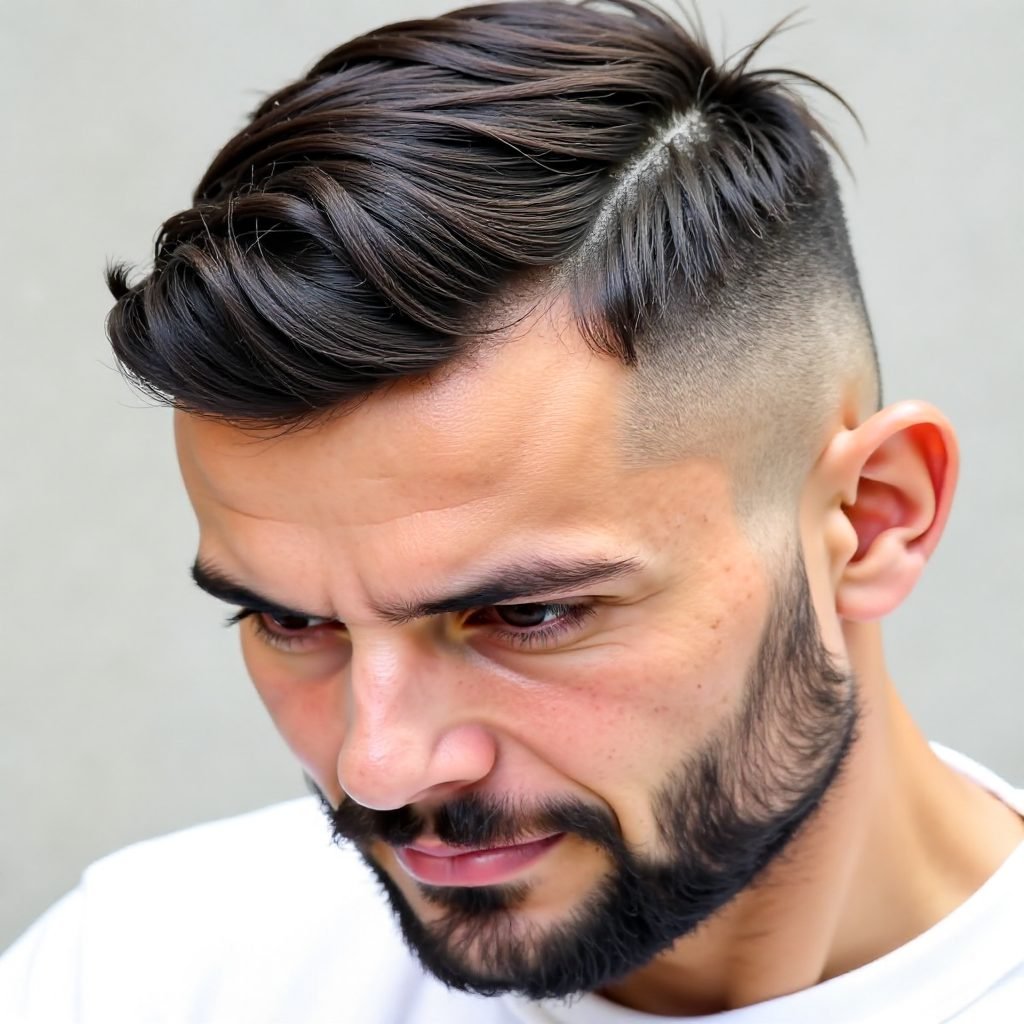
Think of the Ivy League as a grown-out crew cut: there is more length on top, the sides are faded short, and the top can be worn with a side part. A modern version adds a crisp line-up at the hairline and a shaved part for a sharper finish.
Inspiration: @ali_bar.ber
2. Men’s Undercut
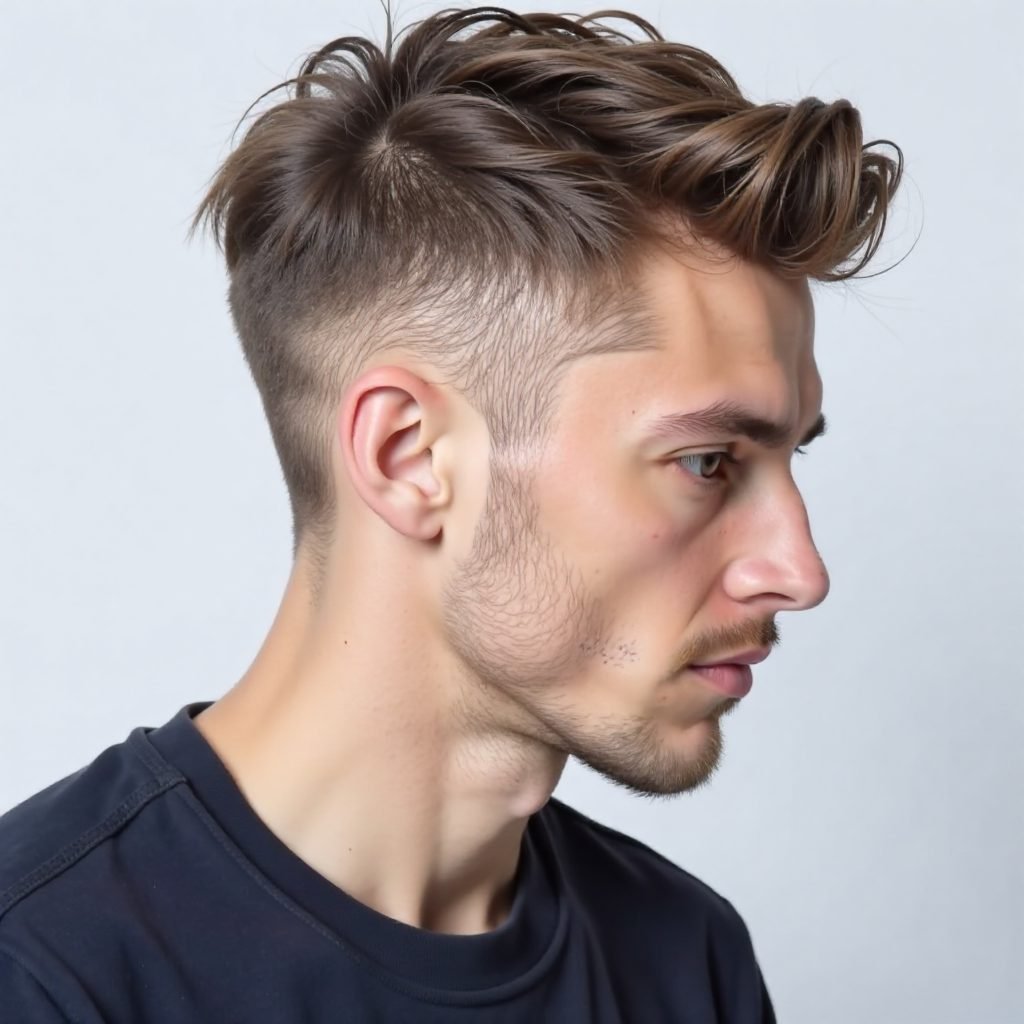
Short buzzed sides and back are kept separate from the longer hair on top, creating the disconnected shape that defines an undercut. This refined take uses a mid fade around the sides and a lower fade at the back for a more polished contrast.
Inspiration: @virgiltb
3. Caesar Cut

Named after Julius Caesar, this cut is built around a short, straight fringe. The updated version shown pairs a bleached, tousled crown with a disconnected skin fade on the sides and back, turning a classic shape into something bolder.
Inspiration: @edelle_brassandbone
4. Faux Hawk Haircut
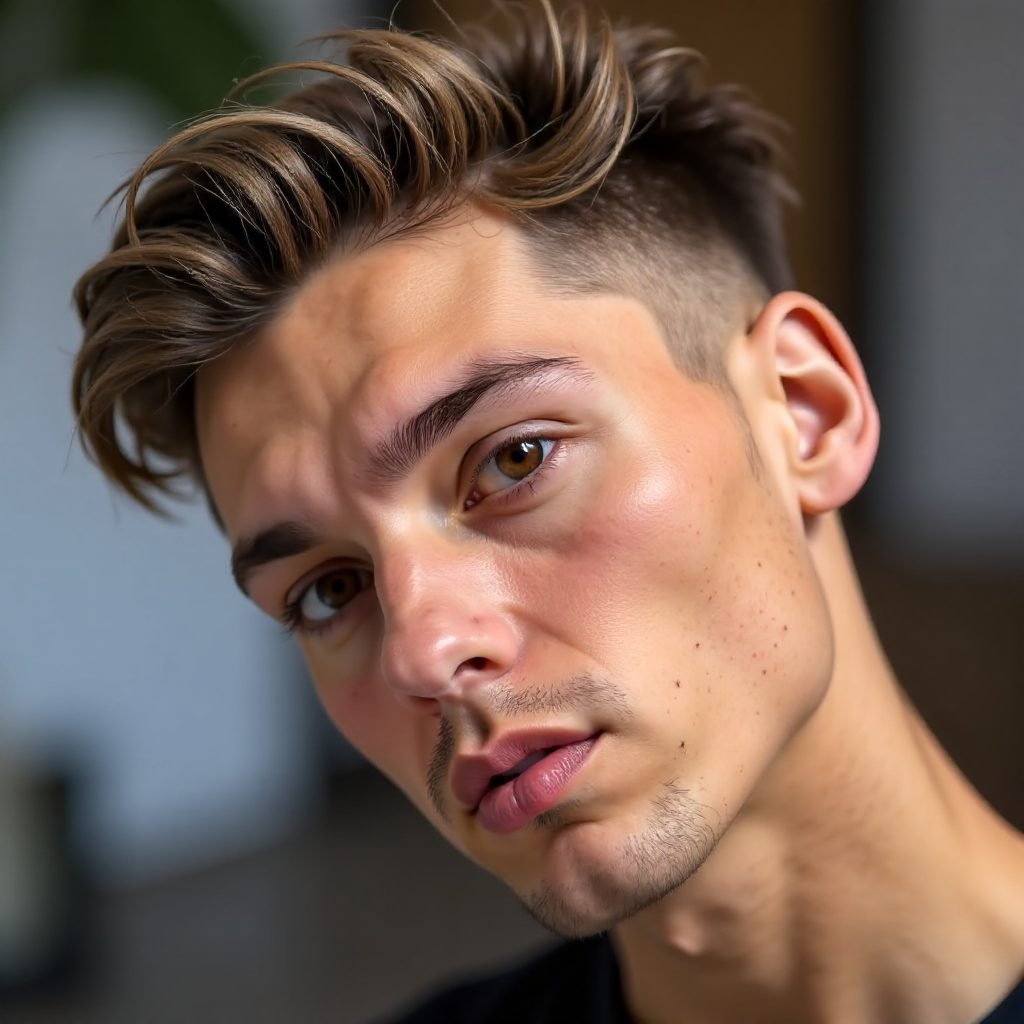
A gentler relative of the mohawk, the faux hawk keeps a strip of longer hair down the centre but blends it into the shorter sides. That softer transition makes it easier to wear at work while still giving height and attitude.
Inspiration: @edelle_brassandbone
5. Taper Cut
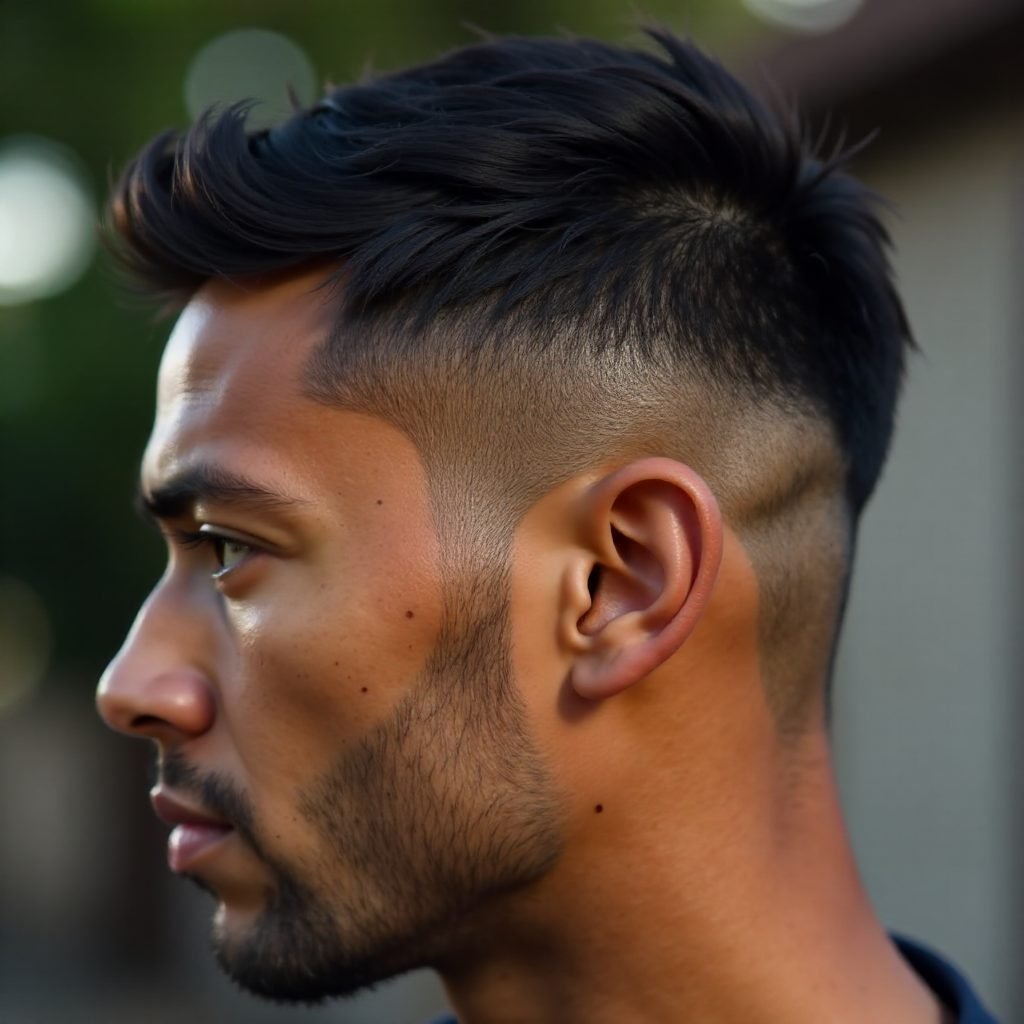
Clippers shorten the sides, then the barber blends them into the top using scissors over comb. Crisp, shaped hairlines give a clean edge. Plan to have a taper tidied every four to six weeks so it keeps its sharp outline.
Inspiration: @m.r.k.thebarber
6. Low Fade
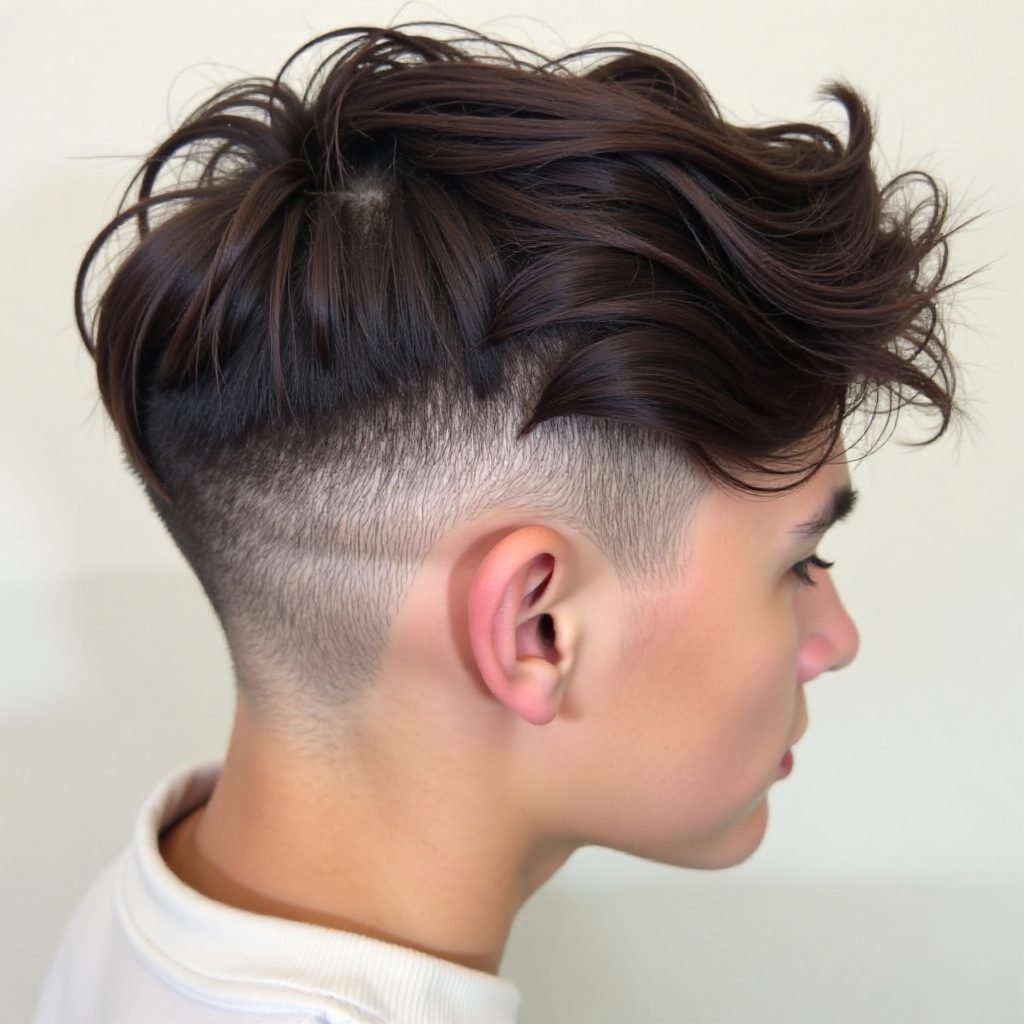
With a low fade, the shortest length sits just above the ears before quickly lengthening into the top. You can push the contrast with a skin fade and a long, messy top, or keep it classic with a shorter top and slightly longer sides.
Inspiration: @sami_barbershop
7. High fade
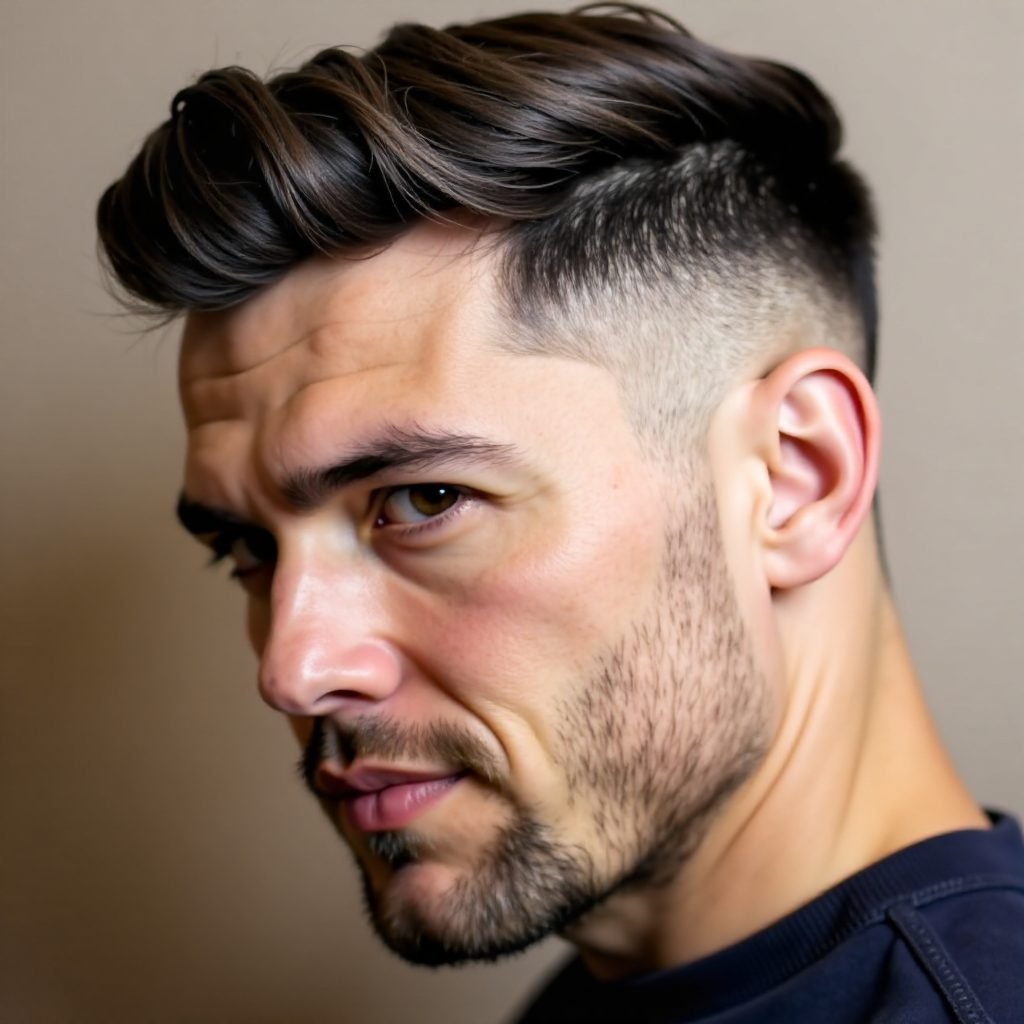
Placing the fade higher on the head creates a stronger contrast between short sides and a longer top. It already looks bold on its own, and a shaved design cut into the sides can make it even more eye-catching.
Inspiration: @saviothebarber
8. Men’s Haircut with Skin Fade
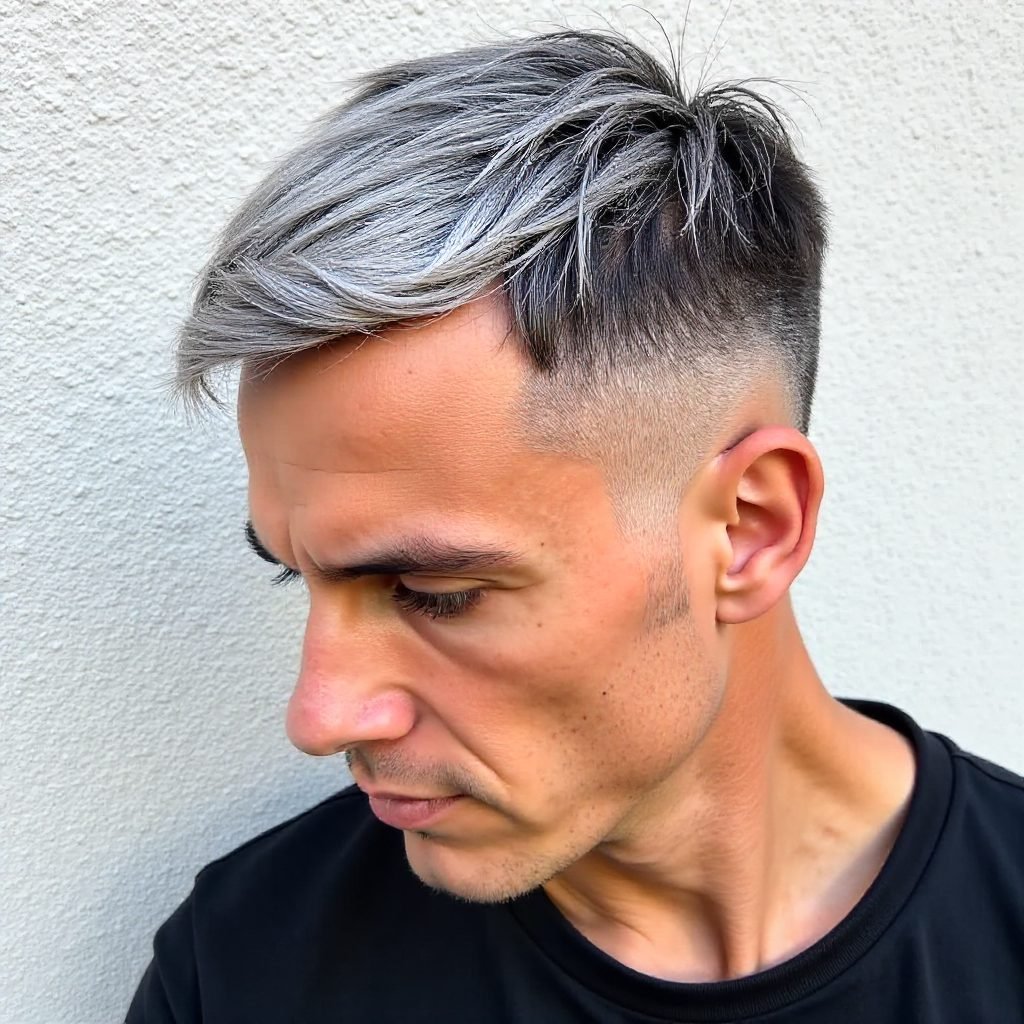
Sides are taken right down to the skin and blended upward in this bald fade. You can choose a low, mid or high placement. Because the shaved area grows back quickly, regular barber visits are needed to keep it sharp.
Inspiration: @jayroberts_
9. Crew Cut
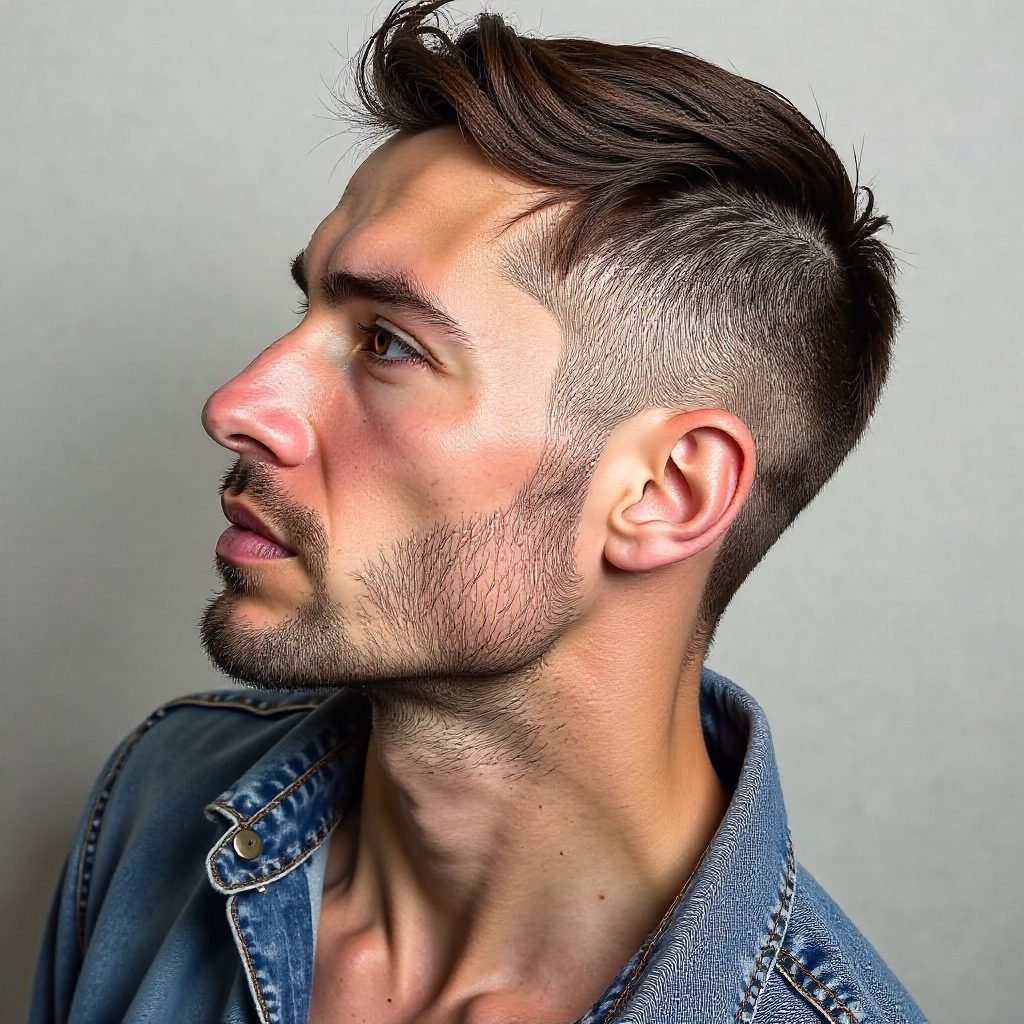
Short, neat and inspired by military grooming, a crew cut needs almost no styling. Beyond regular trims there is little upkeep, and its clean lines flatter most face shapes and work for almost any hair type.
Inspiration: @daniel_giovane_
10. Buzz Cut
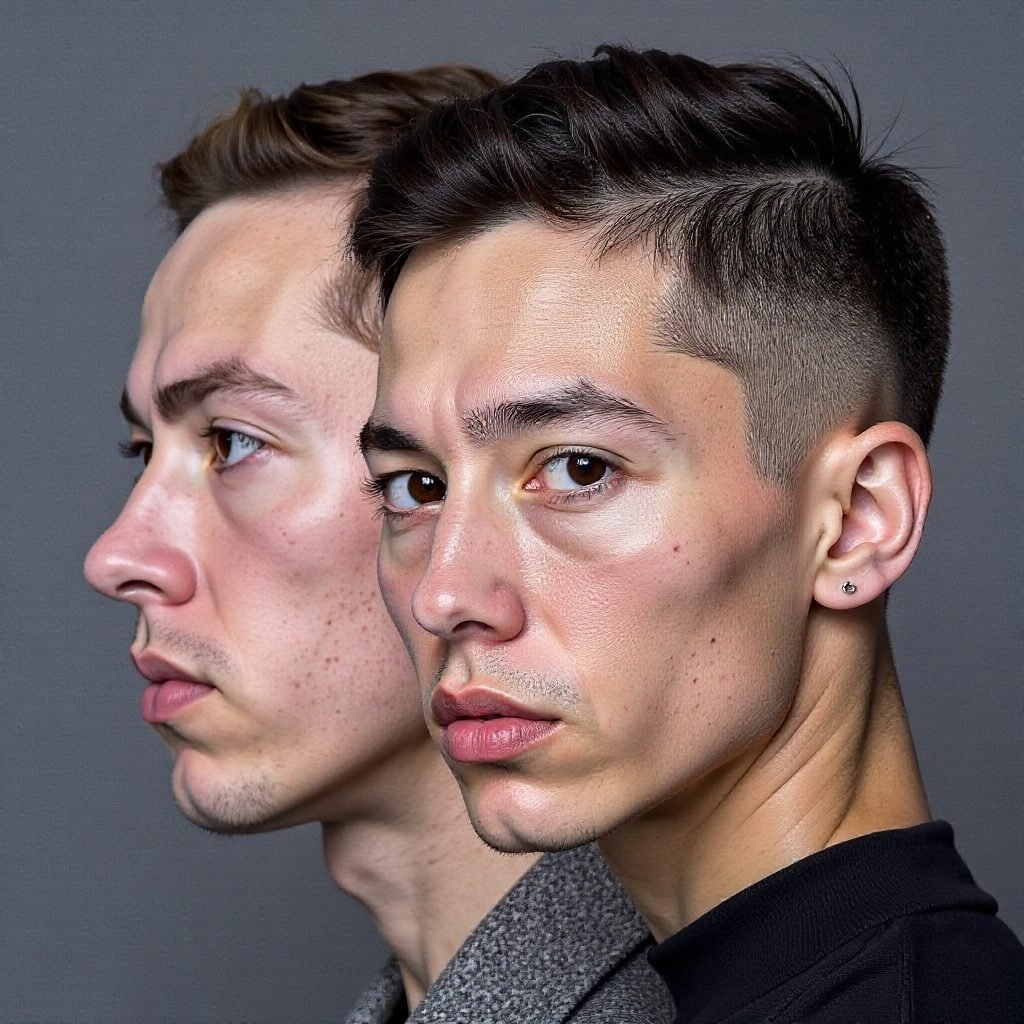
Clippers take the hair close to the scalp all over for the simplest cut on this list. Once given to new army recruits, it has become a modern staple. A shaped hairline makes it look more deliberate and adds an edgy detail.
Inspiration: @nik.liokaftos_barkingber
11. Bowl Cut
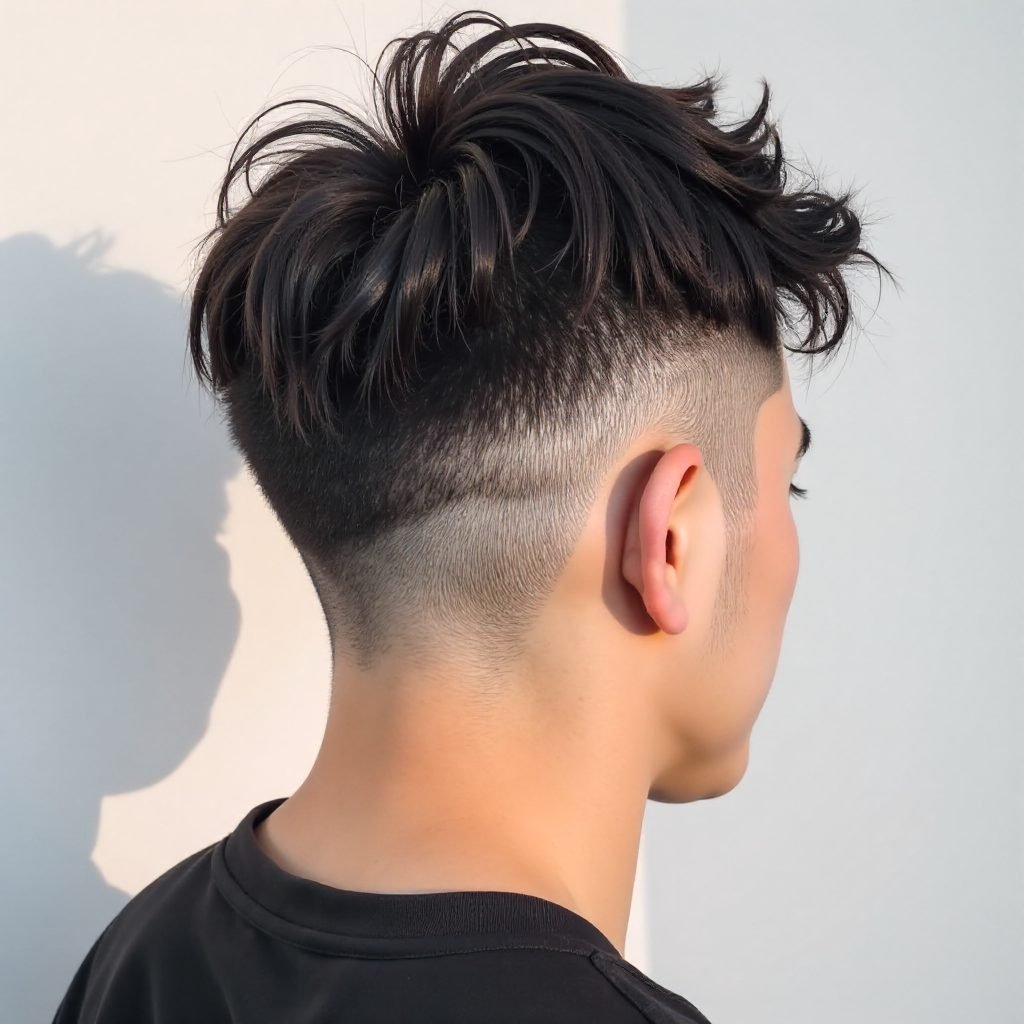
Also called the mushroom cut, the bowl cut has a long, straight fringe and a top cut to one even level. The sides are usually clipped short, leaving a defined line running all around the head where the two lengths meet.
Inspiration: @coiffeurstory
12. Hipster Cut
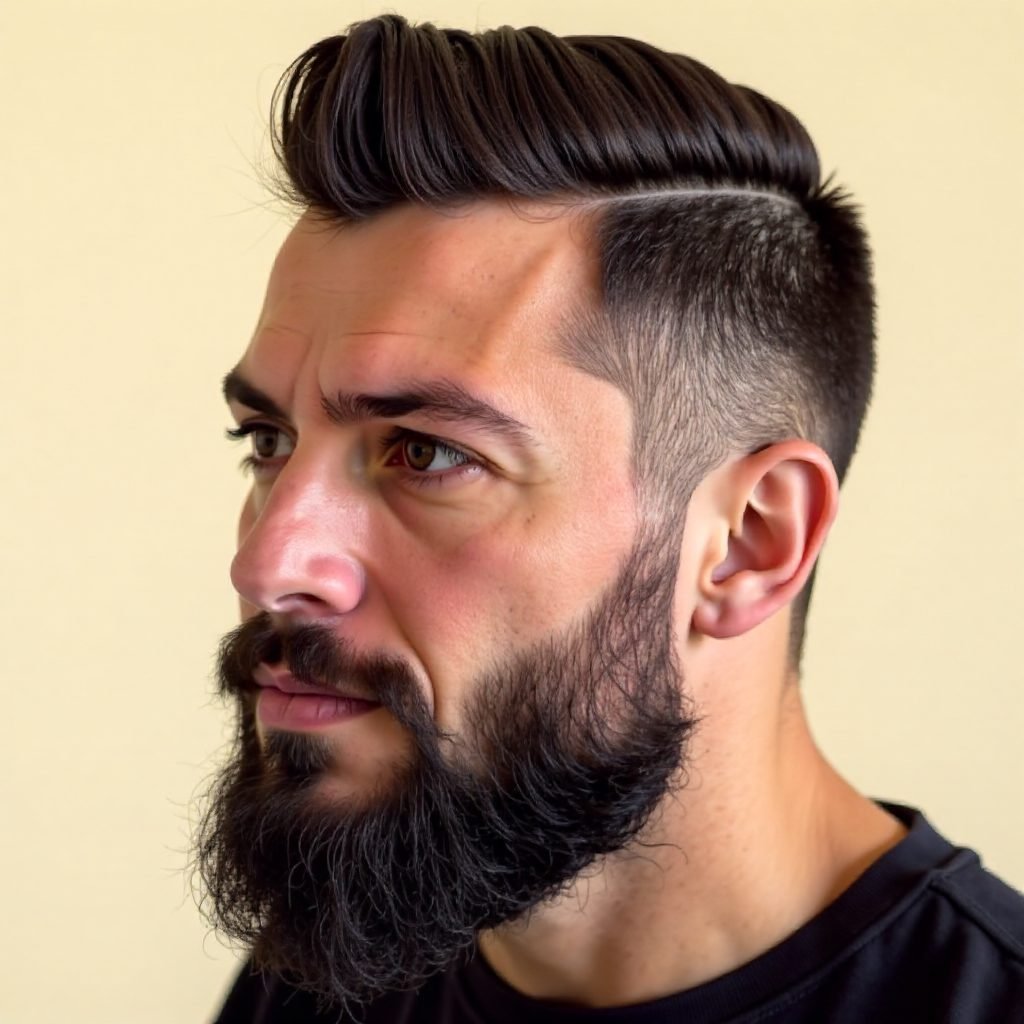
Short tapered sides, a side part and a slicked-back top define the hipster cut, and it sits naturally alongside a beard. To style it, work some gel through damp hair, lift the front and comb it back towards the crown.
Inspiration: @briancaliberhair_
13. Medium Length Haircut
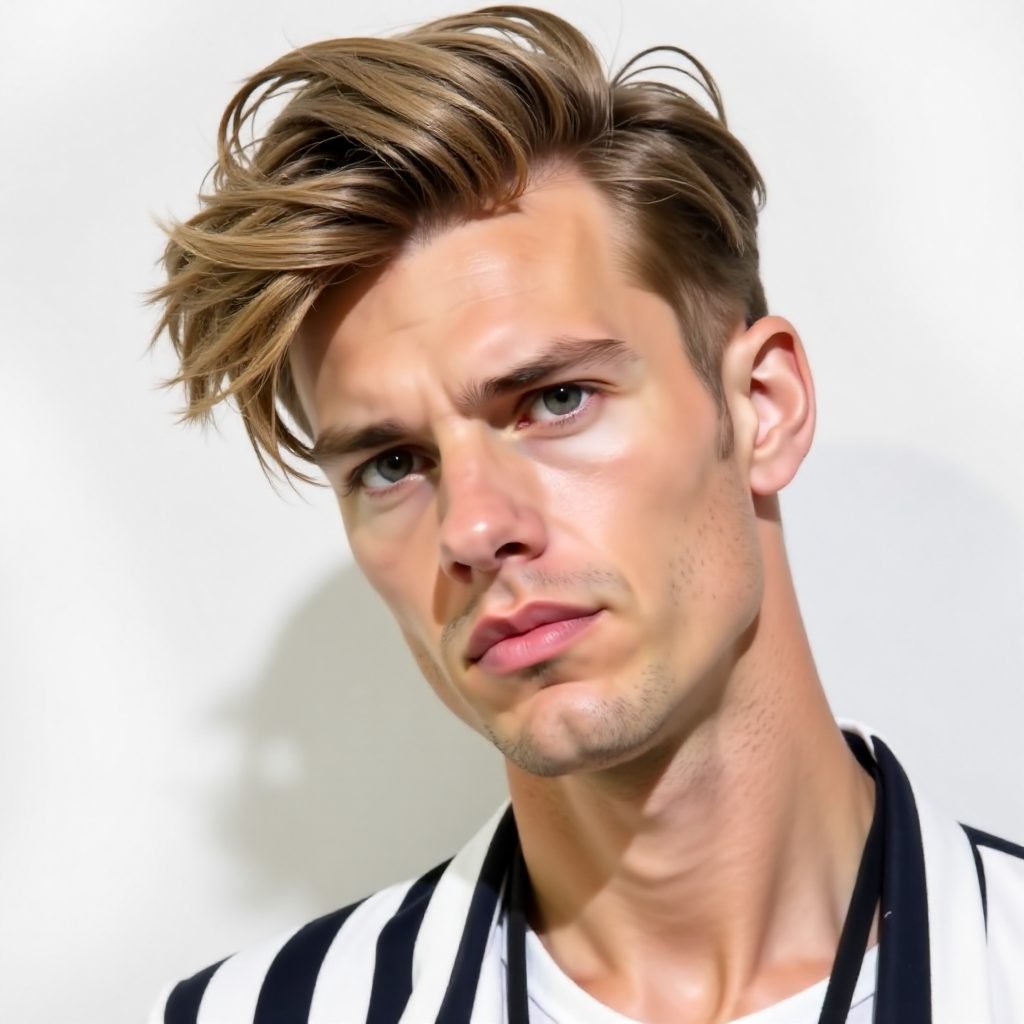
A medium-length cut is among the most flexible options. It can be pushed back, brushed forward, swept to one side or parted down the middle, so you can change the look depending on the occasion.
Inspiration: @vitaly.melchenko
14. Long Men’s Hairstyle

Thick, wavy hair is ideal for growing longer. It takes patience to get through the in-between stage, but once grown, long hair needs fewer trips to the barber than short, faded cuts. Regular trims to remove split ends help the length grow in healthy and even.
Inspiration: @bestmenshaircutsnyc
15. Man Bun
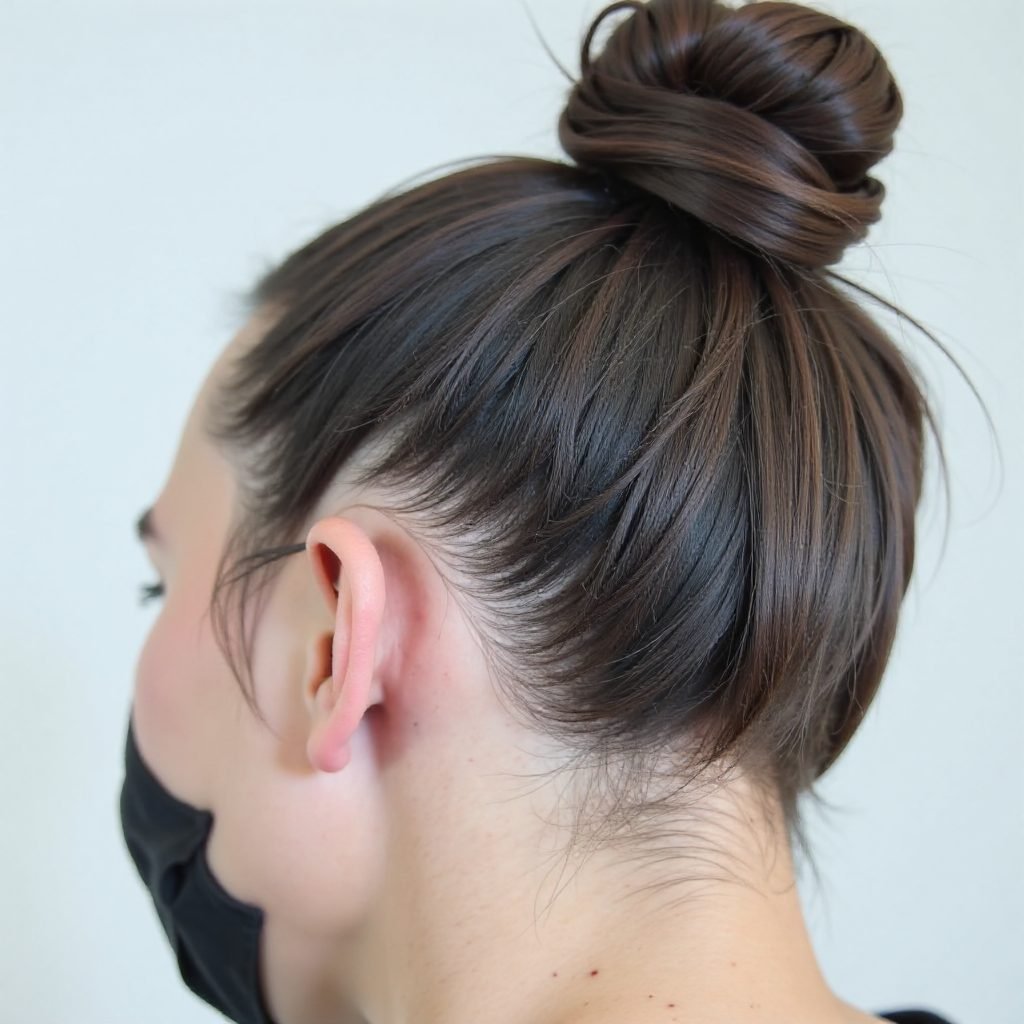
Wrapping long hair into a knot at the crown has become a popular alternative to a ponytail. Shoulder-length hair is usually the minimum. Shaving or tapering the sides and back sharpens the look, and a little pomade controls flyaways.
Inspiration: @raymond_cutzpr
16. Disconnected Haircut with Messy Curly Top
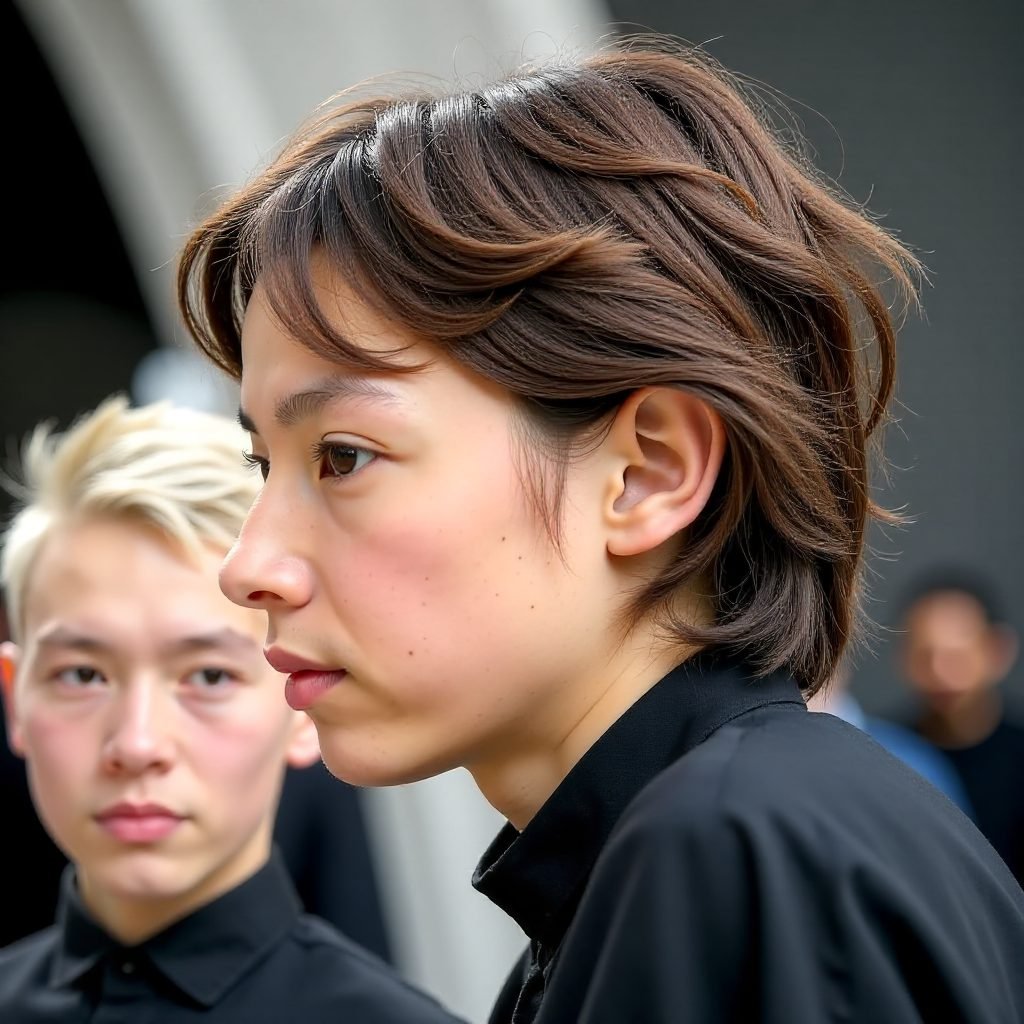
Thick, unruly curls are left long on top and paired with short, disconnected sides. A low fade heightens the contrast. Push the curls forward and use a curl-enhancing serum to keep them defined without crunch.
Inspiration: @iamthebarber132
17. Men’s Haircut with a Side Part
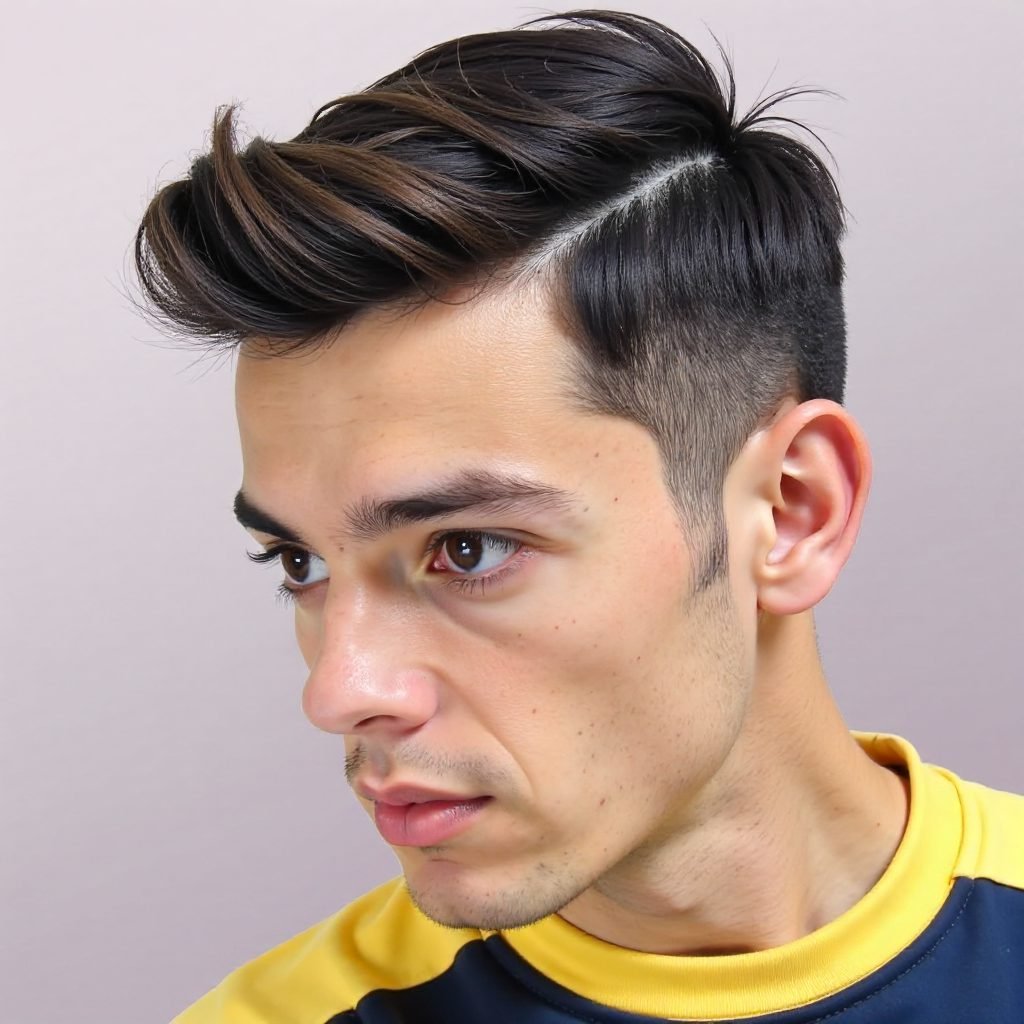
A side part is timeless, suiting most face shapes and pairing well with clean-shaven or bearded faces. A shaved part line gives it a sharper finish, but plan on a few minutes of styling each day or it can look untidy.
Inspiration: @lossantos_vl
18. Pompadour
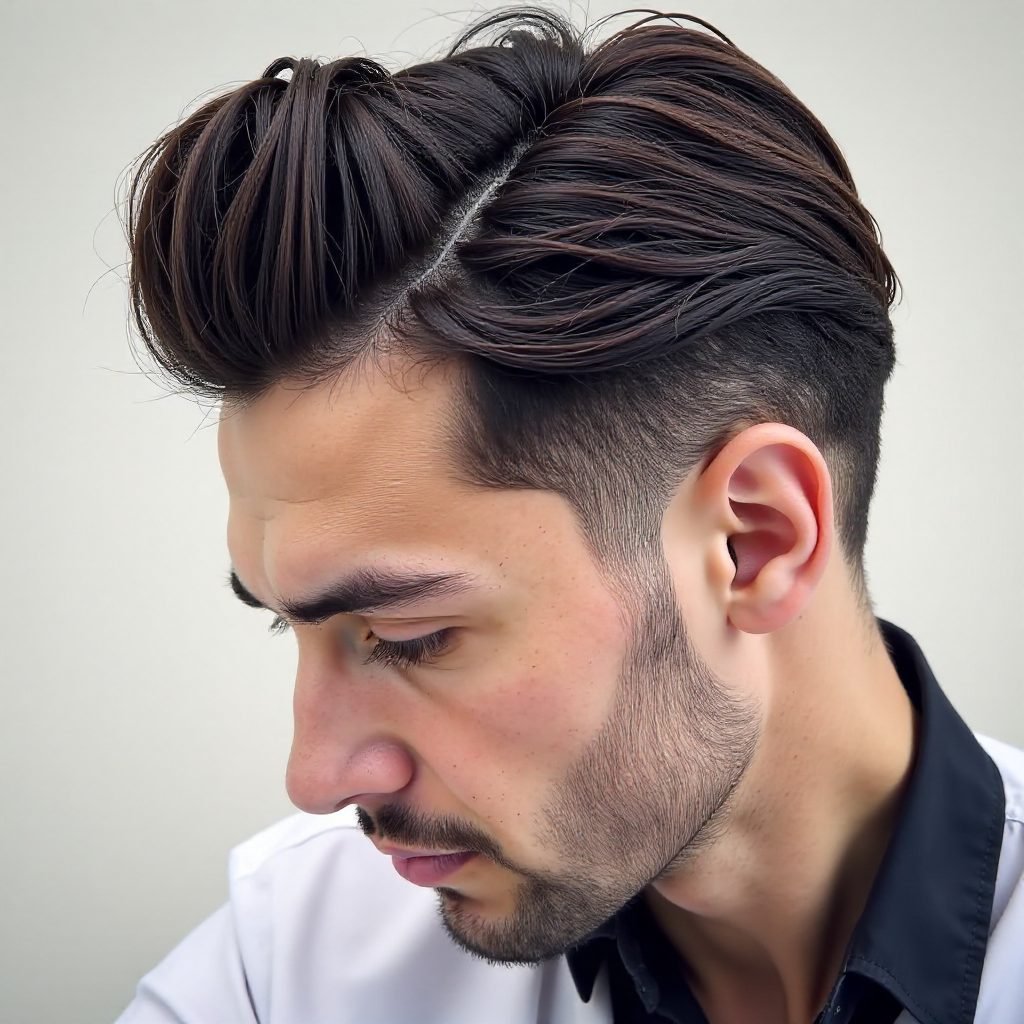
Full and glossy, the pompadour is scissor cut with a long fringe swept up and back. Blow-dry the hair backwards while lifting at the front, then lock it in with a strong hairspray or pomade. Expect styling to take some practice.
Inspiration: @patrikbrowne
19. Quiff
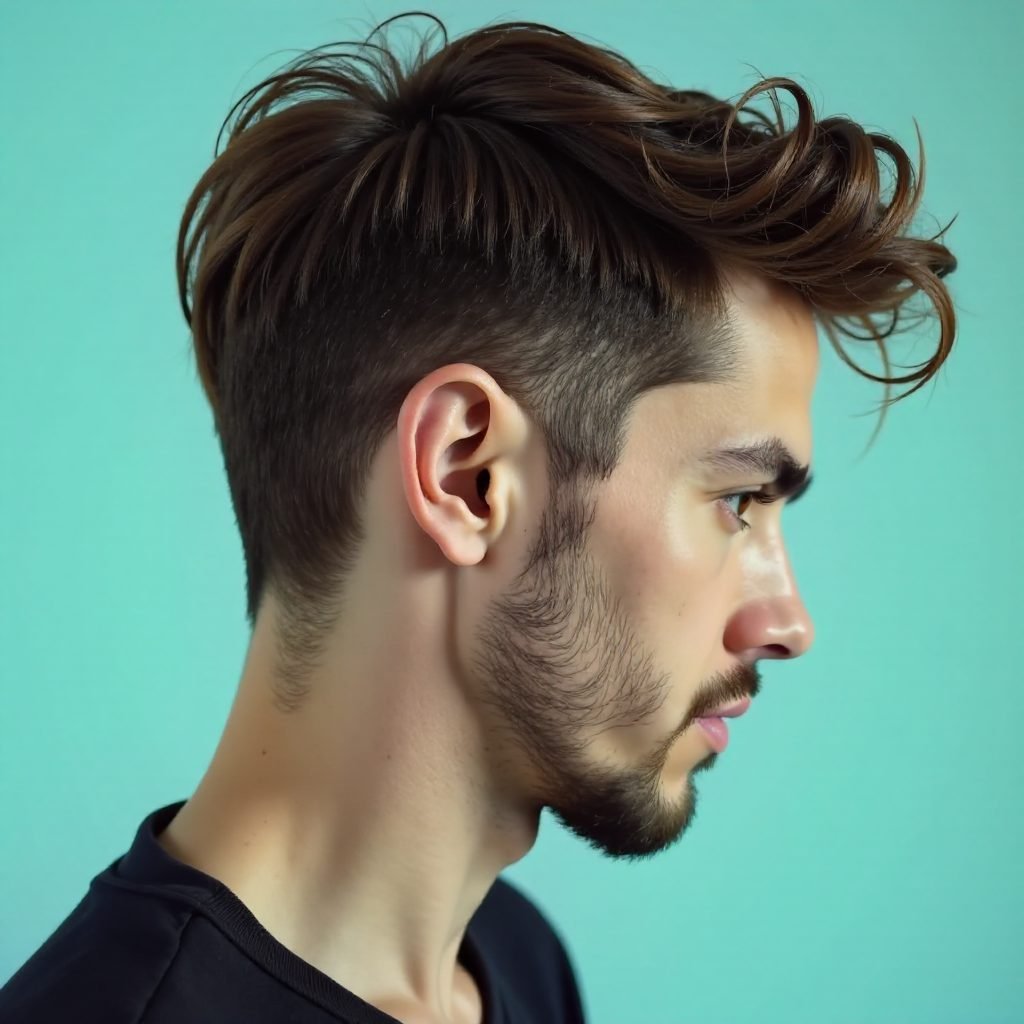
Similar to a pompadour but more forgiving, the quiff works even on shorter hair. Rub a little clay or pomade between your palms and push the front up and back with your fingers for a textured lift.
Inspiration: @yousef_lahijani
20. Comb Over
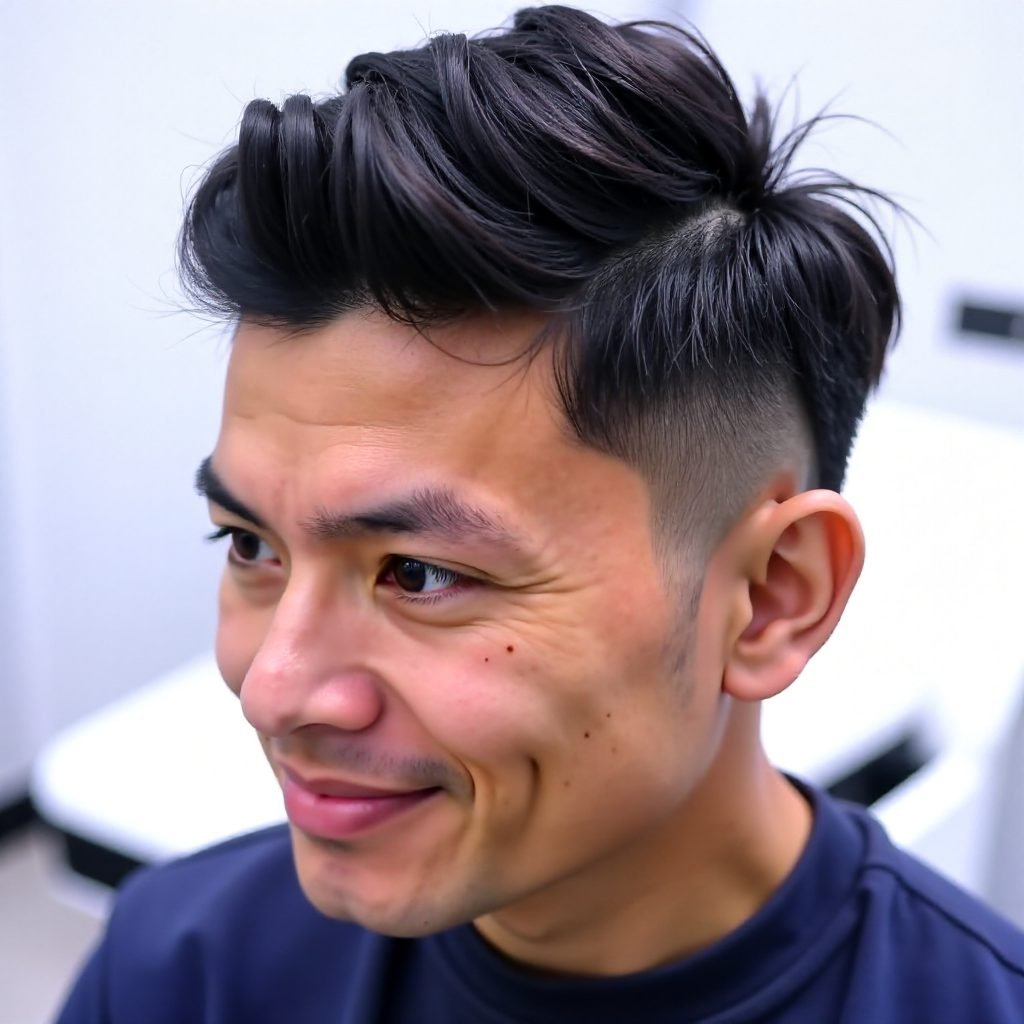
Once considered old-fashioned, the comb over has been reinvented. Today’s version combines tapered or faded sides, a shaved parting and sometimes a lined-up hairline, mixing several current trends into one tidy cut. It suits straight or slightly wavy hair, styled with a light pomade.
Inspiration: @tough_barbershop
21. Classic Slick Back
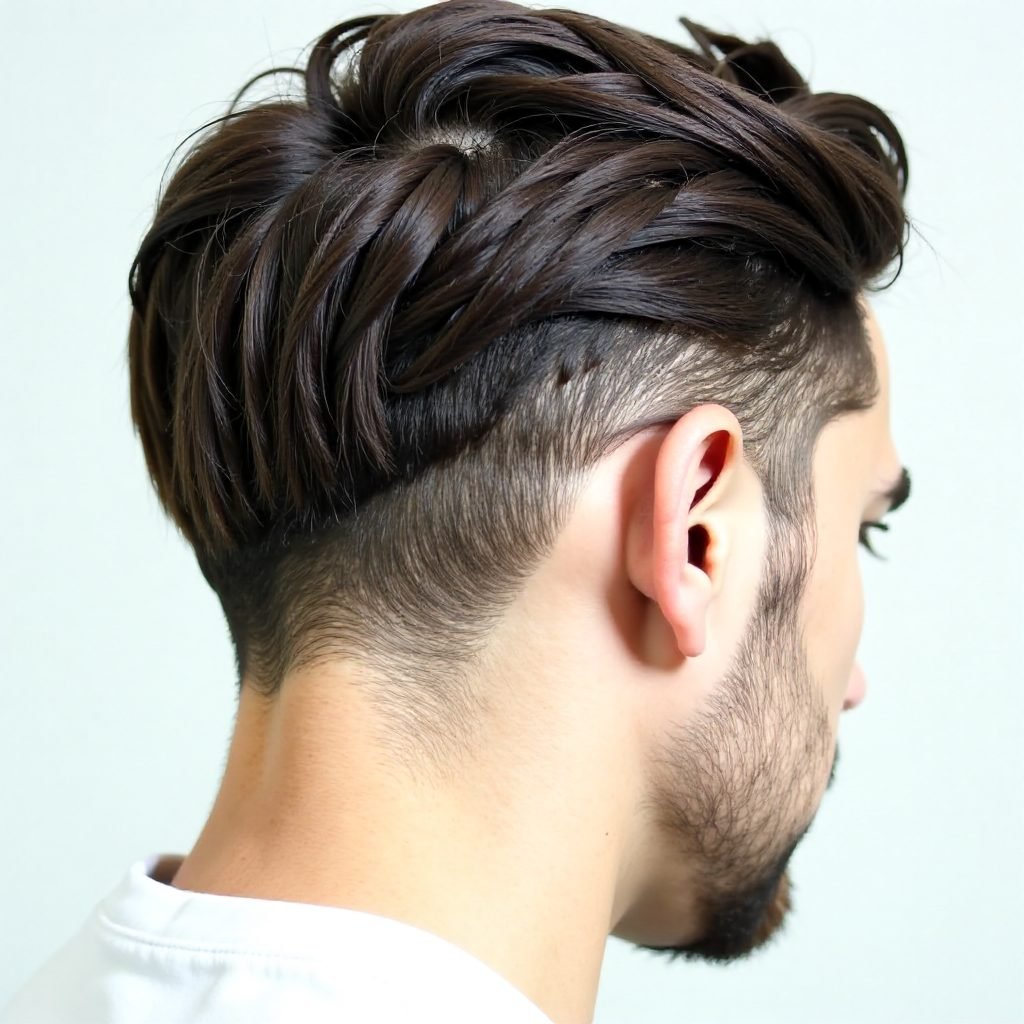
Slicked-back hair looks modern and confident at once. The sides can be as short or as long as you like, but the top should be around 2.5 to 3 inches. Use pomade or gel to keep everything smooth and in place.
Inspiration: @briancaliberhair_
22. Fringe Hairstyle
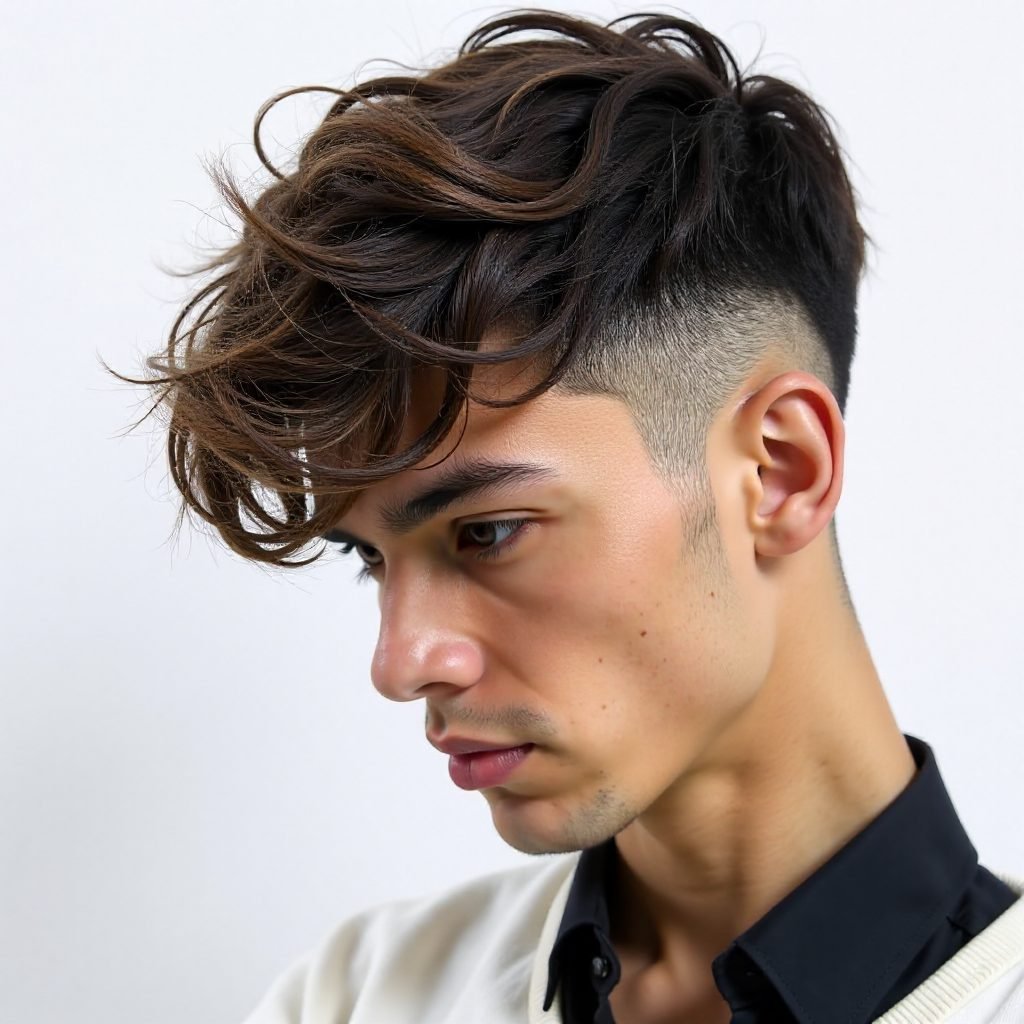
A long, messy fringe is the focus here. It can be swept back or left to fall over the forehead, though getting it right takes practice. A matte paste worked through dry hair creates the separated, tousled texture.
Inspiration: @bagir94
23. Dreadlocks
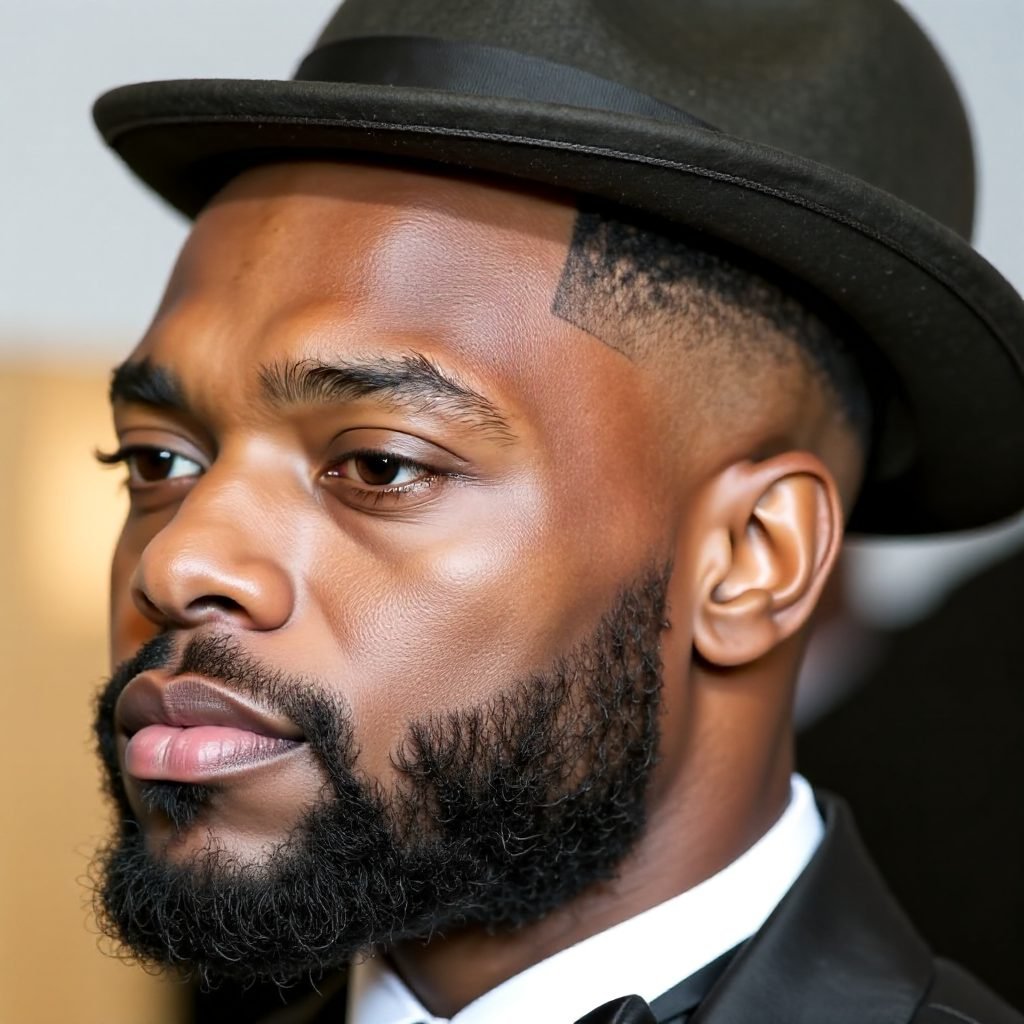
Short dreadlocks pair neatly with a medium skin fade and a well-trimmed beard. Growing the locks longer opens up more styling options, including ponytails, half-up looks and buns. Keep the fade fresh every few weeks so the contrast with the locs stays sharp.
Inspiration: @wavykid_kev
24. Shaved Sides
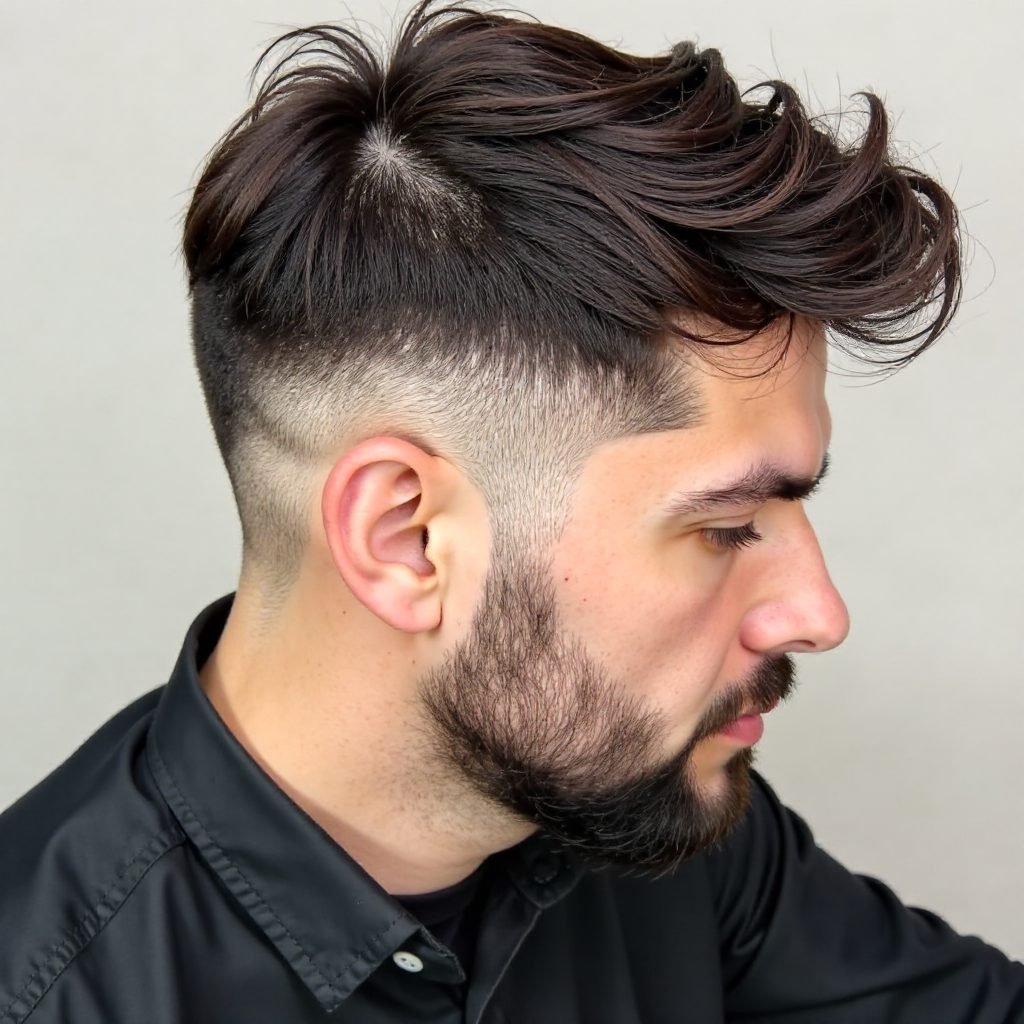
For something bolder than a standard taper, a bald fade blends into the longer top, and a shaved line runs down the side and through the beard. The detail adds an edgy finish but needs frequent touch-ups.
Inspiration: @babu.barber
25. Men Braids
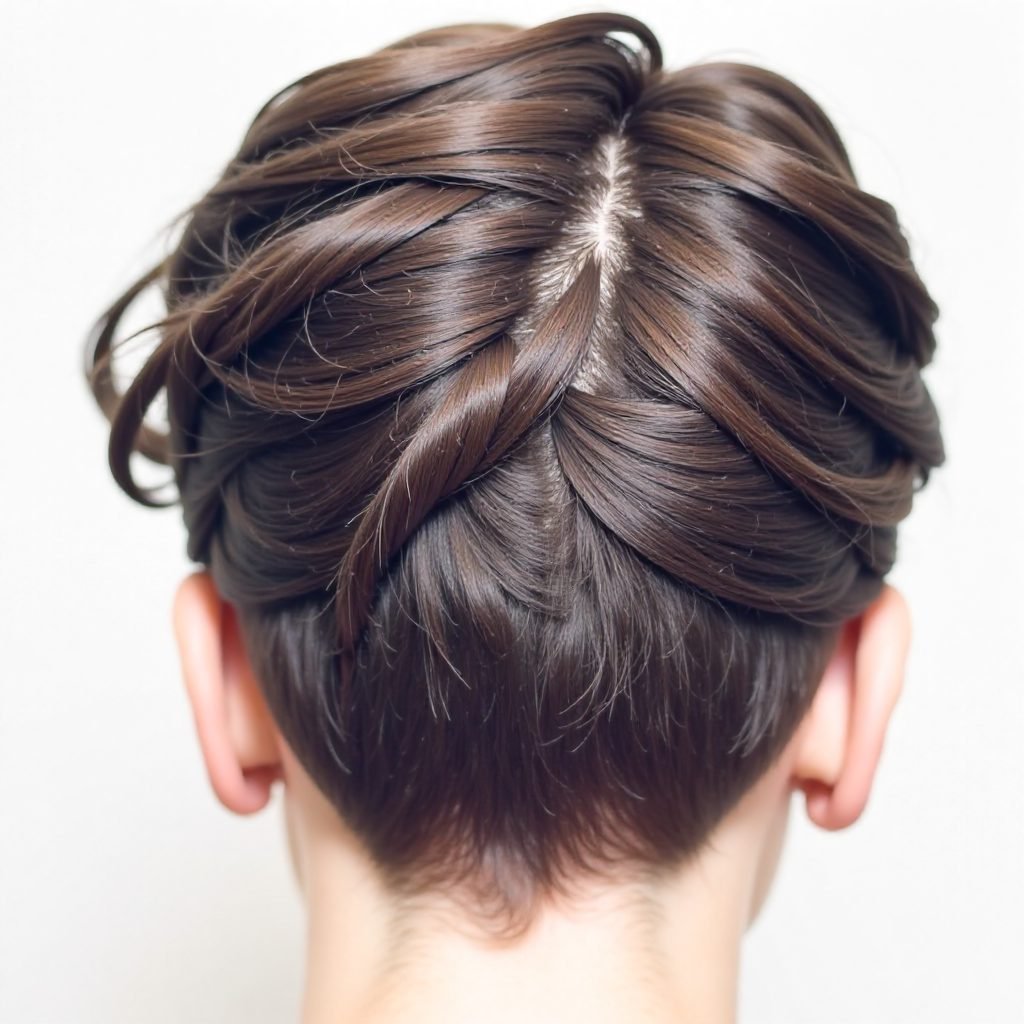
Braids for men come in many forms. Beyond box braids, a stylist can create unusual partings such as the triangular sections shown here. Pairing them with buzzed sides and back makes the pattern stand out.
Inspiration: @torres.tresses
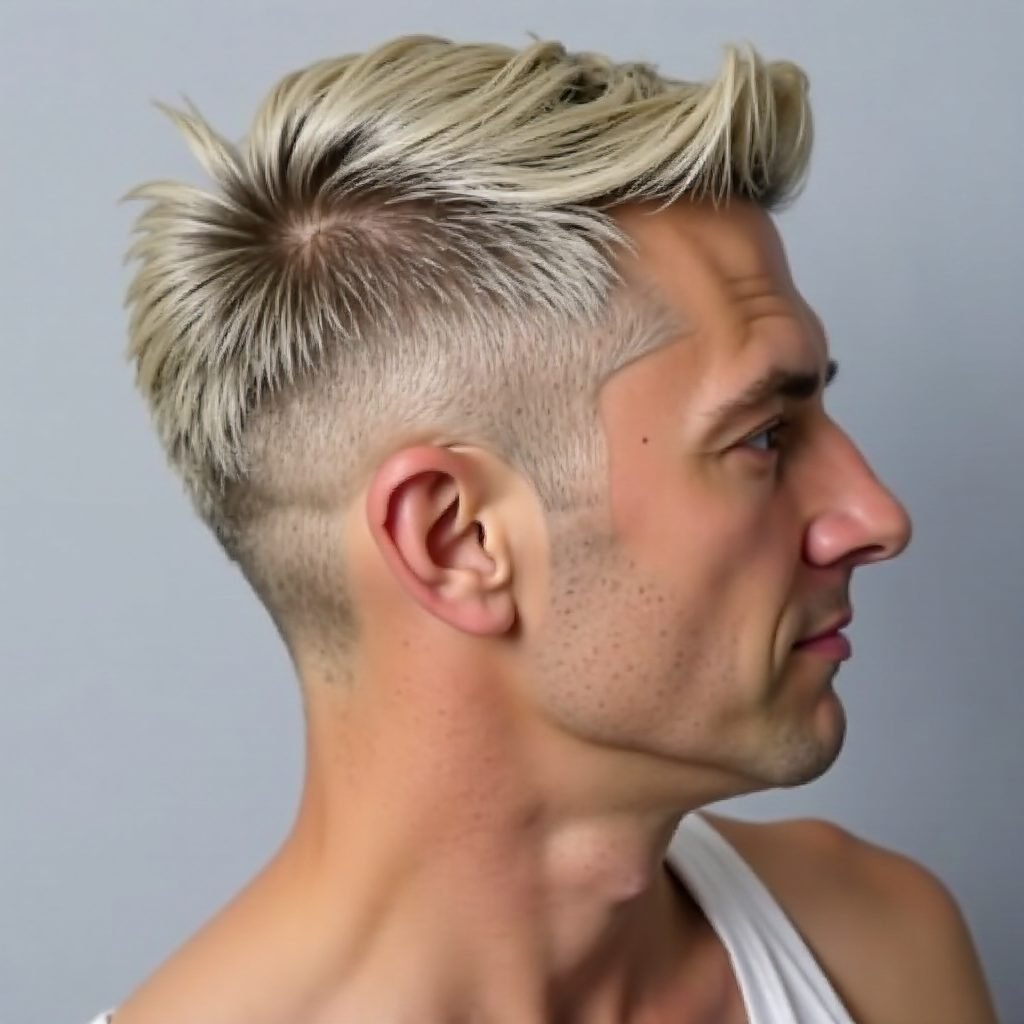
26. Spiky Hairstyle
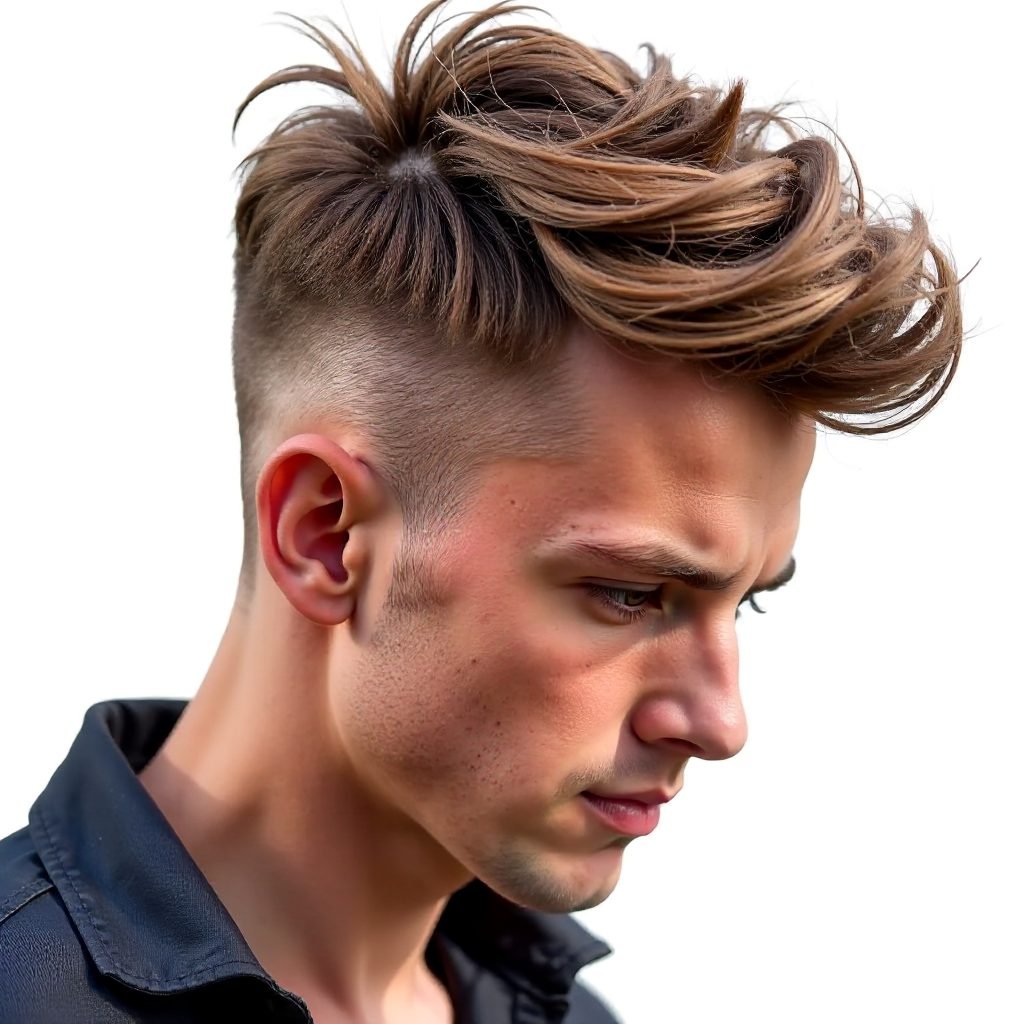
Spikes can be created on most short and medium cuts, including crew cuts, faux hawks and tapers. A matte texturising paste gives grip and separation, while a strong-hold spray keeps the points upright through the day.
Inspiration: @m.r.fade
27. Mullet Cut

Popular in the seventies and later dismissed, the mullet has made a big comeback. Short at the front and sides with length at the back, it brings a rebellious, retro attitude that still feels unconventional.
Inspiration: @briancaliberhair_
28. Flat Top Haircut
A flat top needs serious skill, because the top must be cut perfectly level. Seek out a barber experienced with this cut, and use a firm wax plus hairspray to keep the surface sharp and upright.
Inspiration: @virgiltb
Barbershop vocabulary worth knowing
- Clipper guard numbers describe length: a #1 is about 3 mm, a #4 about 13 mm. Mention the number you want on the sides.
- Taper vs fade: a taper shortens gradually around the ears and neckline, while a fade goes down to very short or bare skin.
- Low, mid, high refers to where the shortest part of the fade sits on the head.
- Disconnected means there is no blend between the top and sides.
- Line-up or shape-up is the sharp edging of the hairline and beard.
Matching a cut to your routine
If you want a style that looks good straight out of the shower, crew cuts, buzz cuts and short crops are the safest picks. Pompadours, quiffs, slick backs and side parts all look best with a few minutes of blow-drying and a pomade or clay each morning. Faded styles keep their crisp edge for two to four weeks, while longer hair can go two to three months between trims. Bring a photo, and tell your barber about cowlicks or a receding hairline so they can adjust the shape.